Portfolio · 2026 · 0-1 builds
From a blank page to a launch-ready product.
Product manager specializing in taking ambiguous, regulated consumer problems from 0 to 1: health, intimacy, parenting. I find the problem, decide what the product must never do, scope the first version hard, and build it myself with AI coding agents until it can be argued with.
Snapshot
Three 0-1 builds, one method
Each was taken from an ambiguous brief to a working product in six to twelve weeks, as the sole product manager and the builder. Click into any of them below.
The product
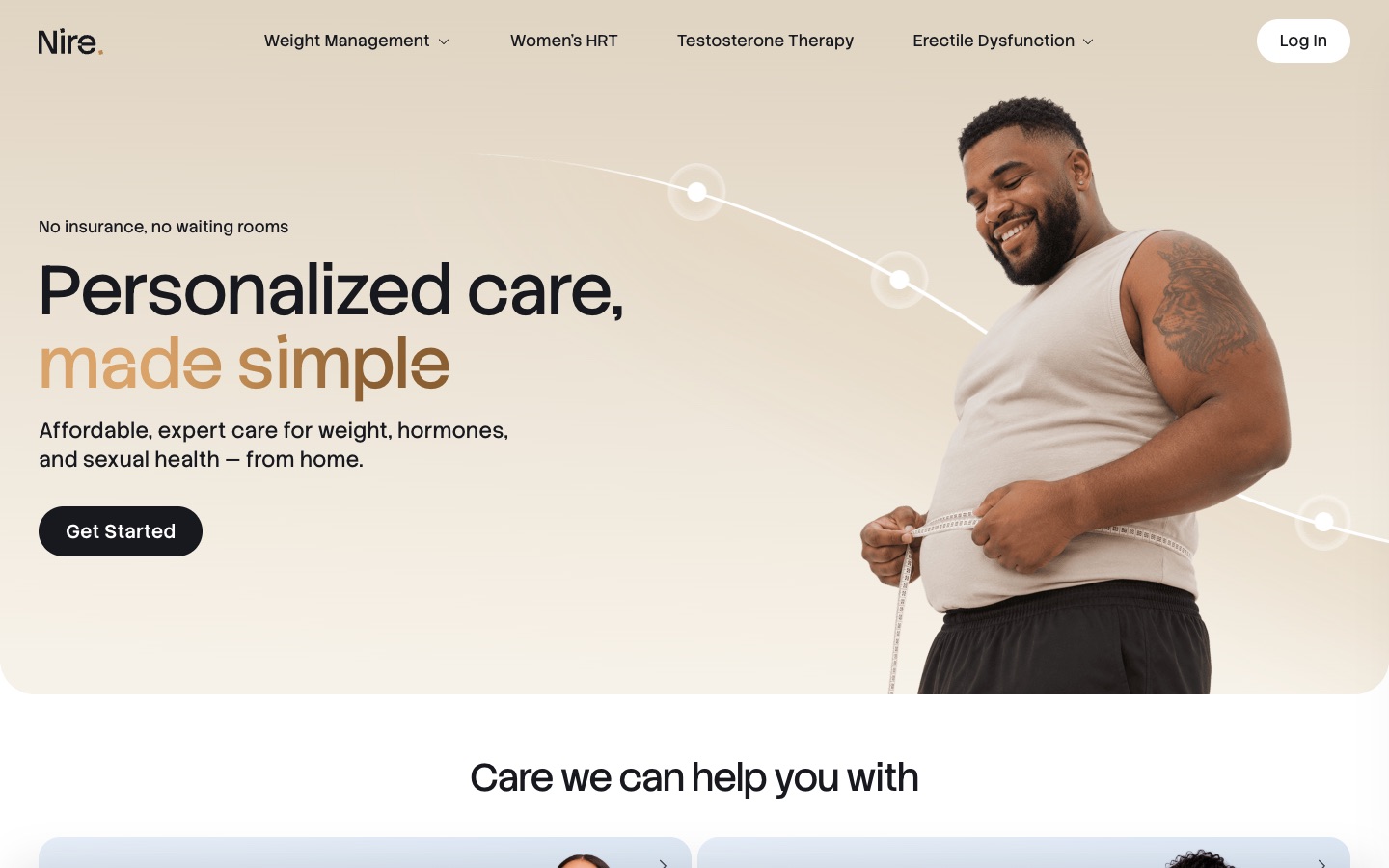
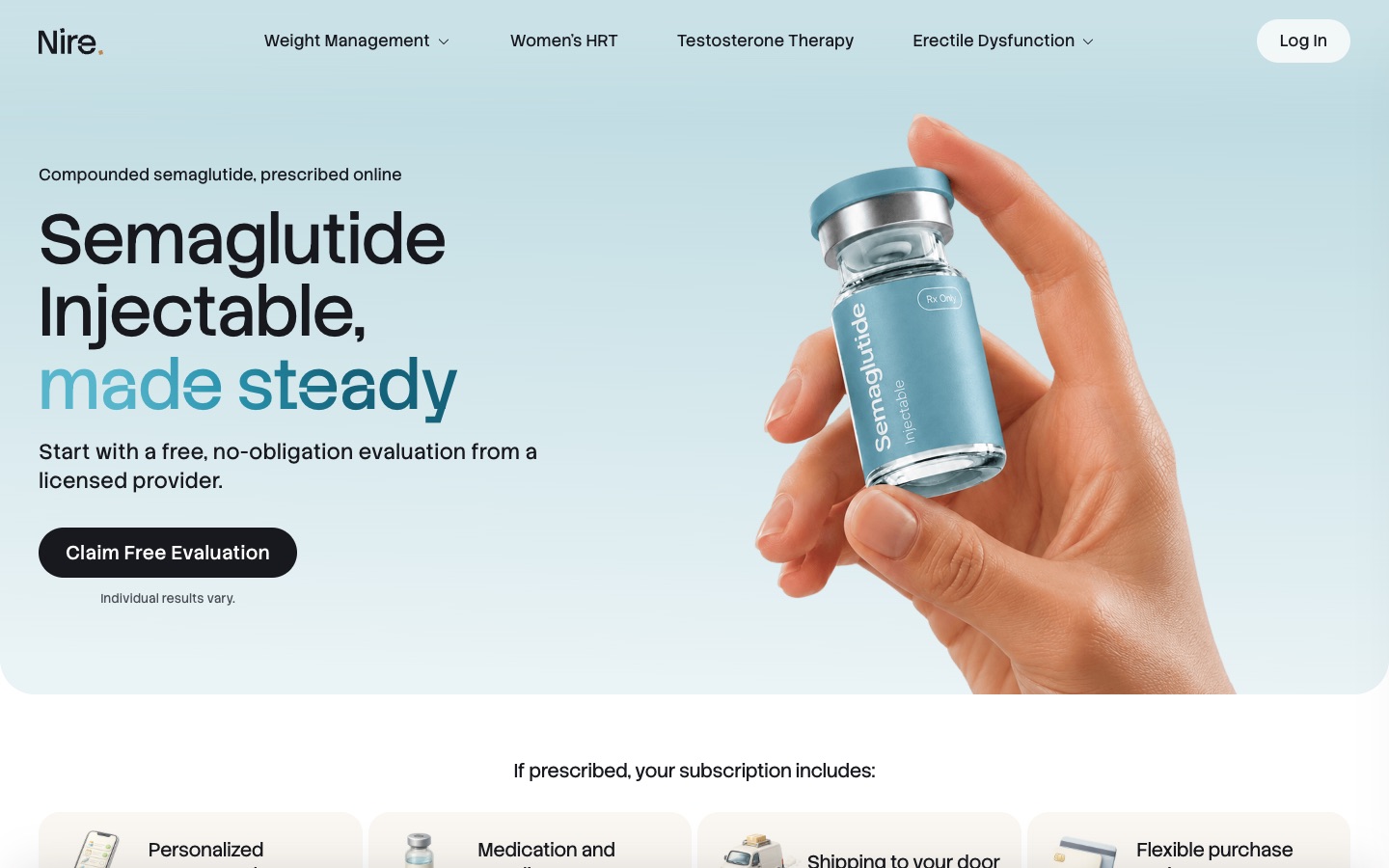
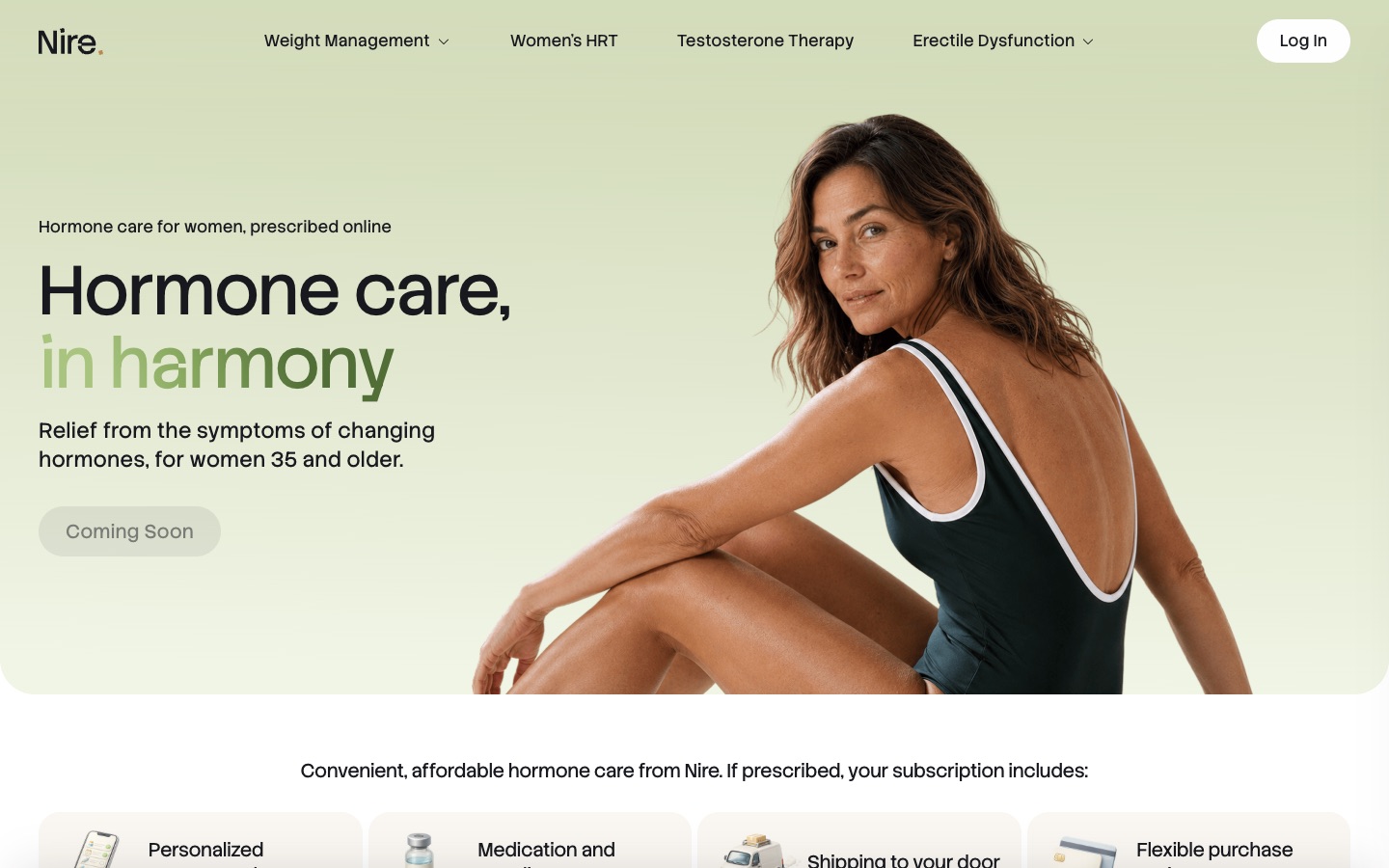
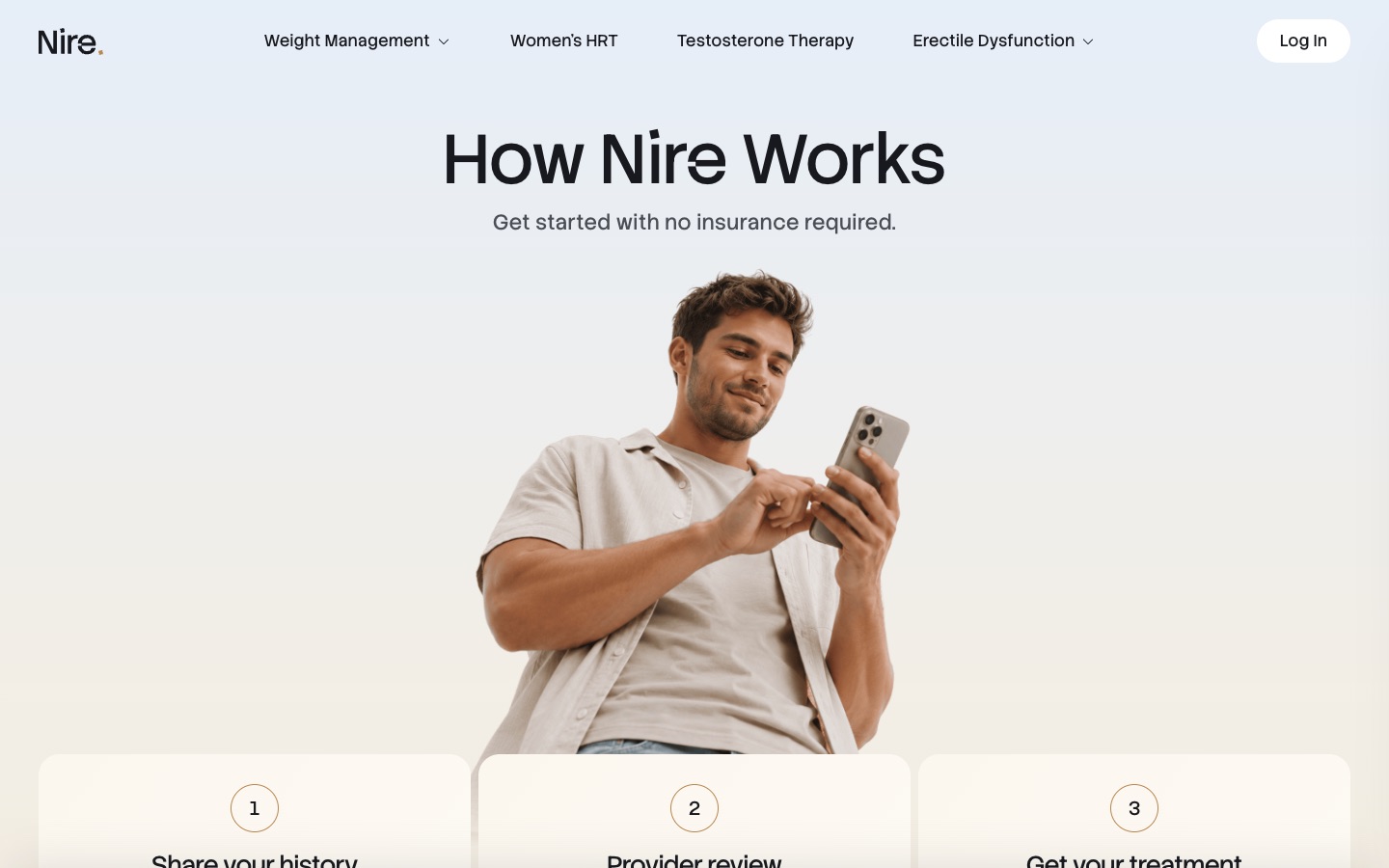
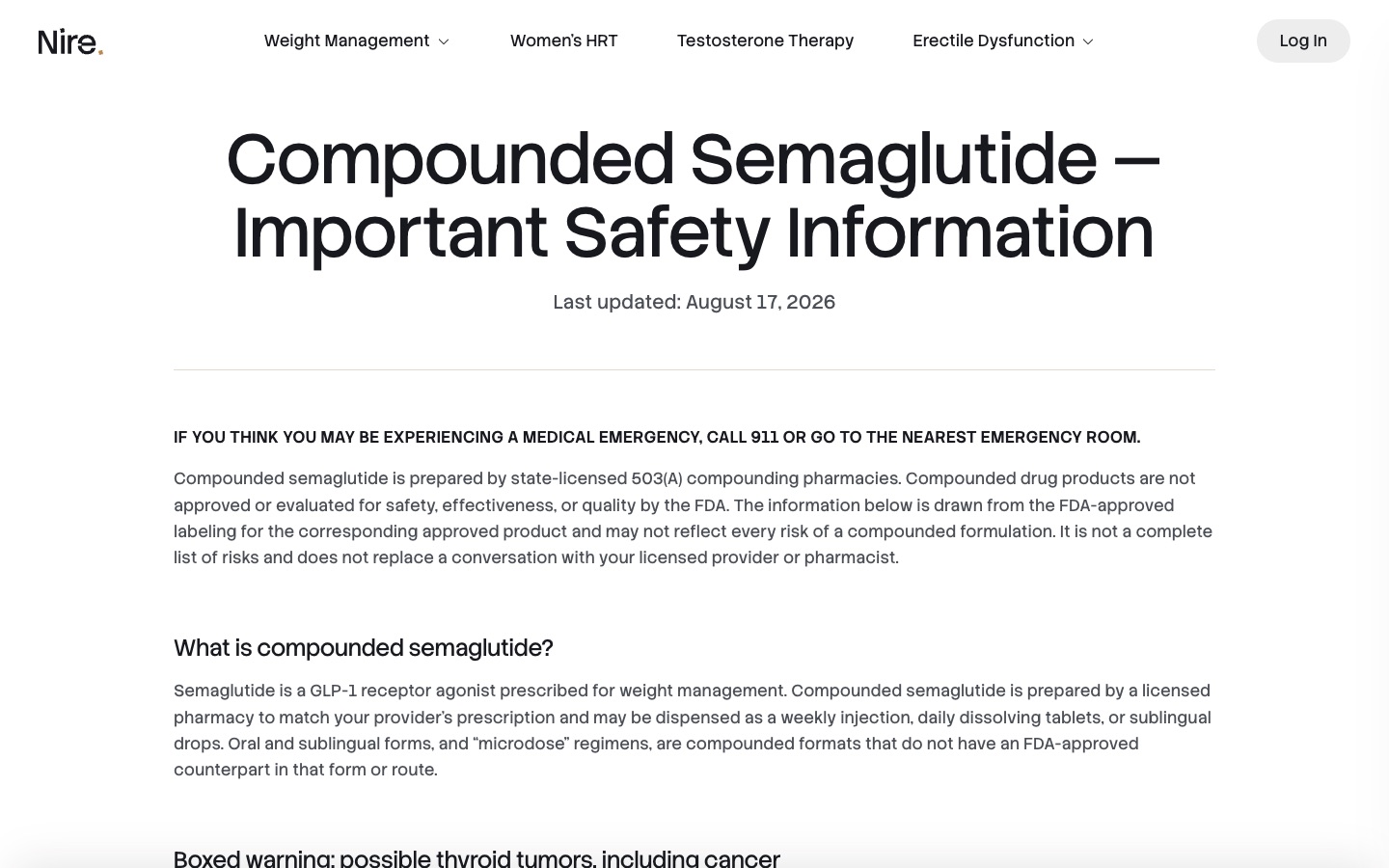
What patients see
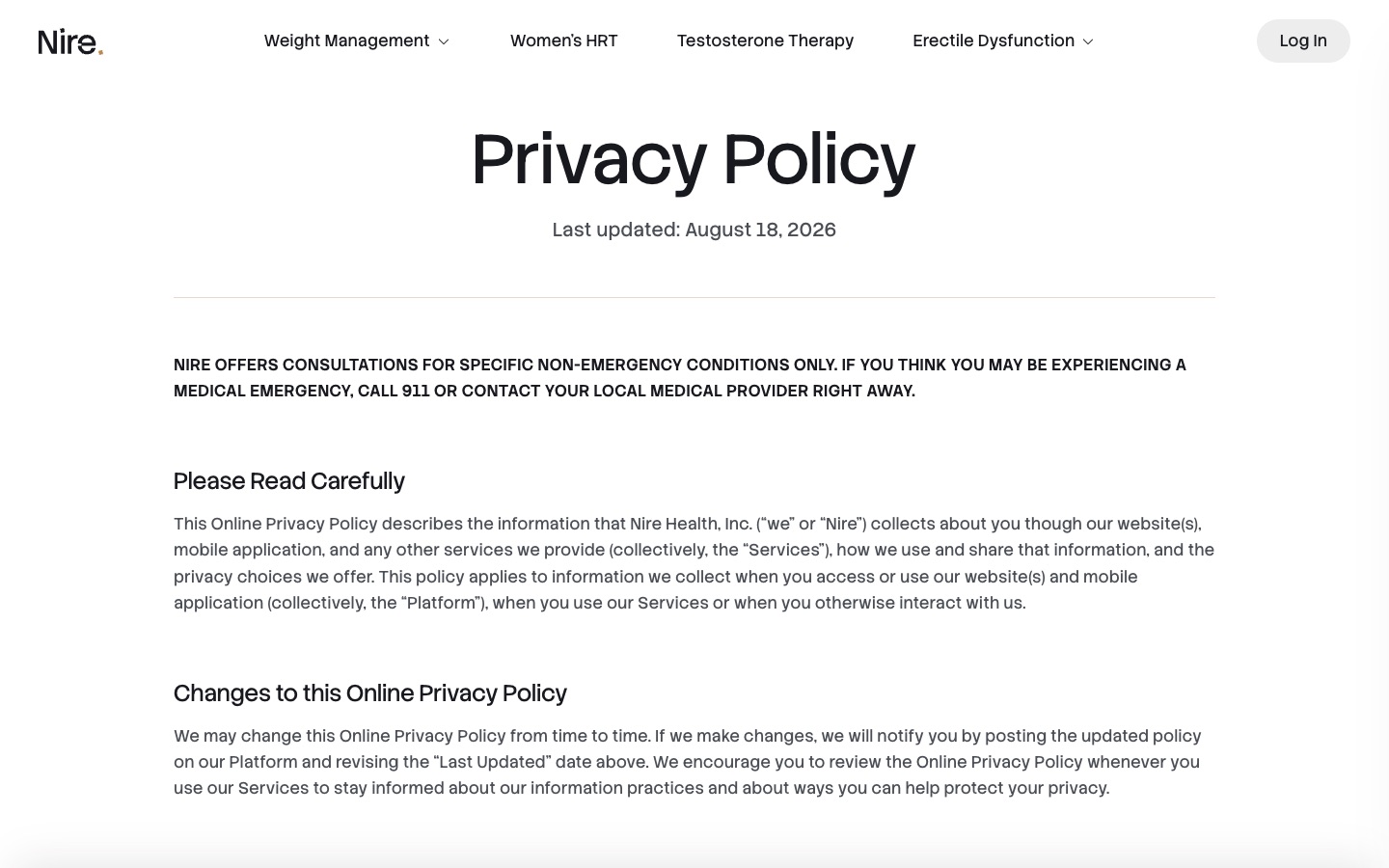
Desktop pages of the launch build, sliding inside one screen. One hero message per treatment area, clinician-led claims only, and the mandated disclosure where the client directed it.

Scoping in practice
Claim the process, not the outcome
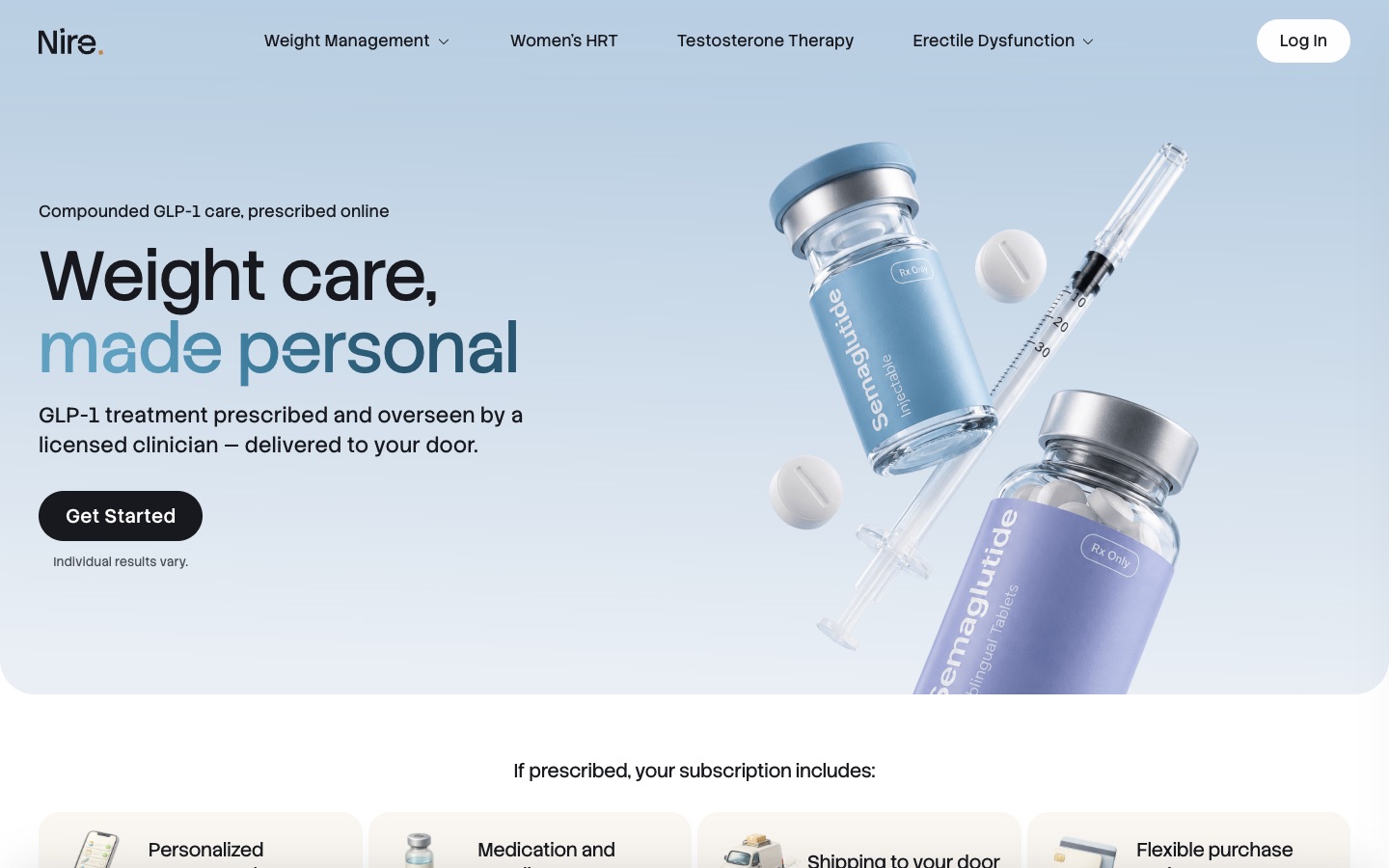
Problem: "evidence-based" is an efficacy claim, and no clinical studies exist on compounded semaglutide. Decision: say what actually happens to the patient. A licensed clinician prescribes and oversees treatment, which is a real differentiator. "Individual results vary" under the call to action.
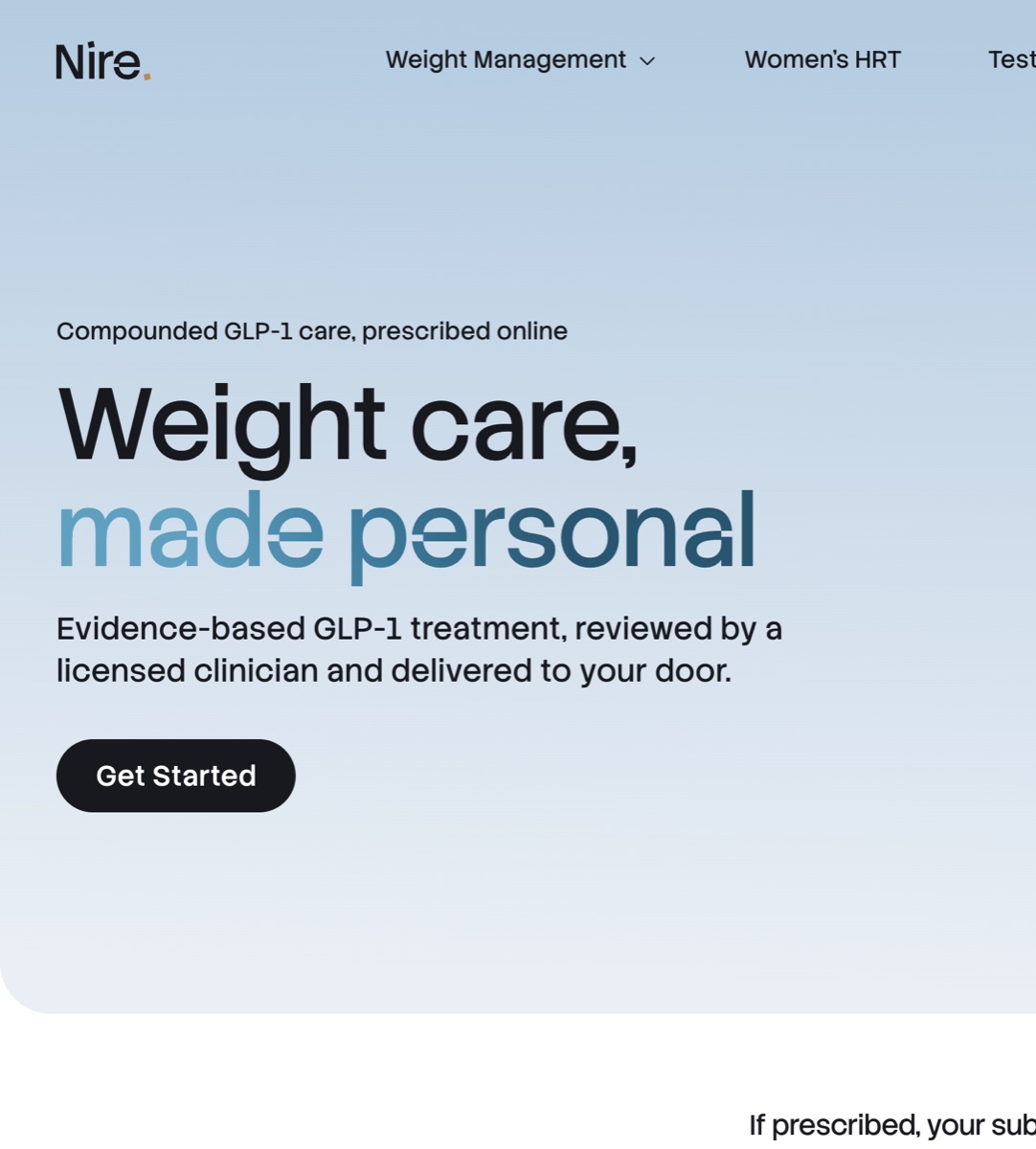
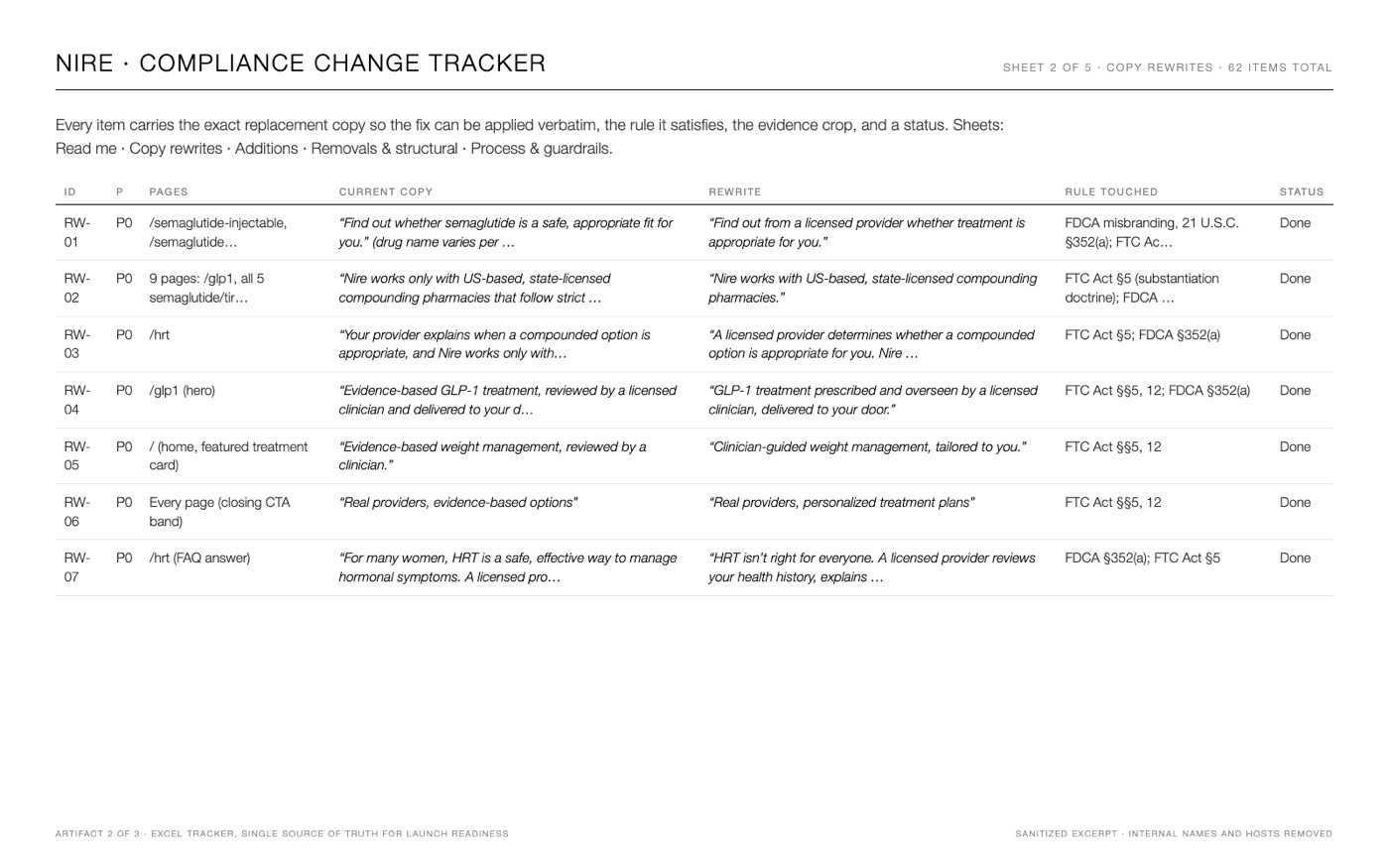
GLP-1 hero. "Evidence-based GLP-1 treatment, reviewed by a licensed clinician and delivered to your door."
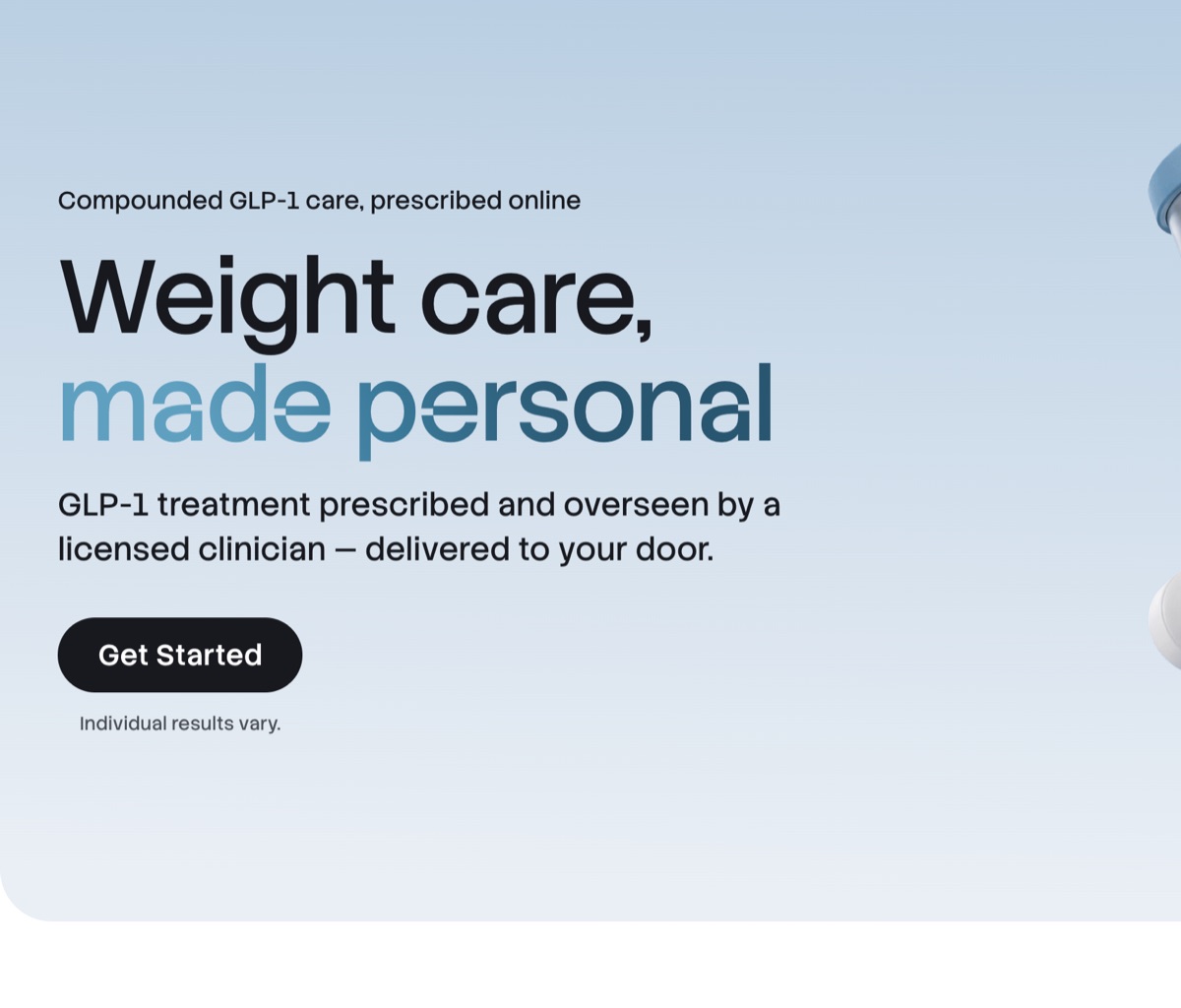
Shipped. "GLP-1 treatment prescribed and overseen by a licensed clinician, delivered to your door." plus "Individual results vary."
Scoping in practice
Trade invented proof for real information
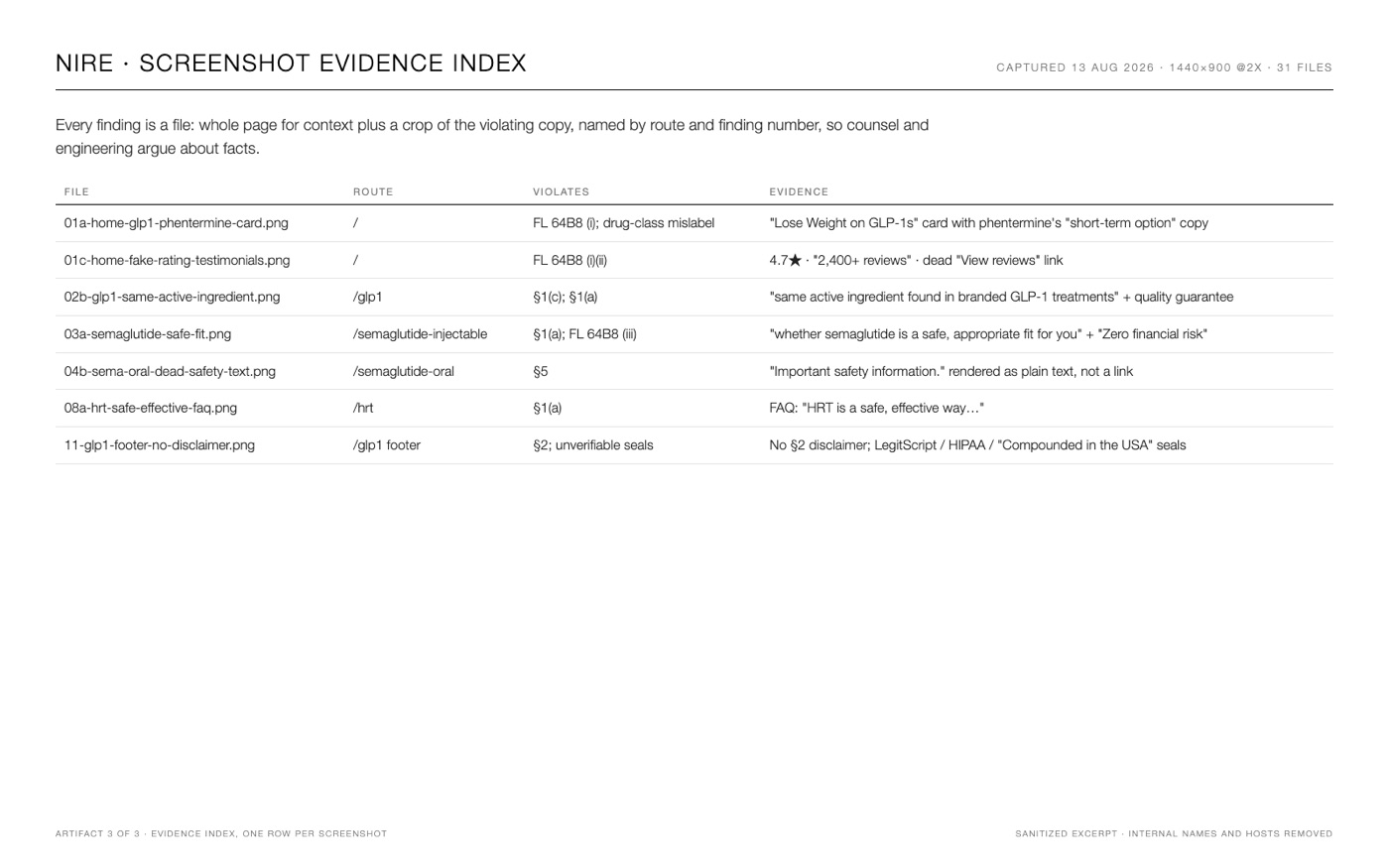
Problem: a 4.7-star rating, "2,400+ reviews", five placeholder quotes and a dead "View reviews" link, in a category where fake reviews carry per-violation penalties; and "important safety information" promised but rendered as plain text. Decision: remove the social proof entirely and spend the effort on six per-product safety pages.
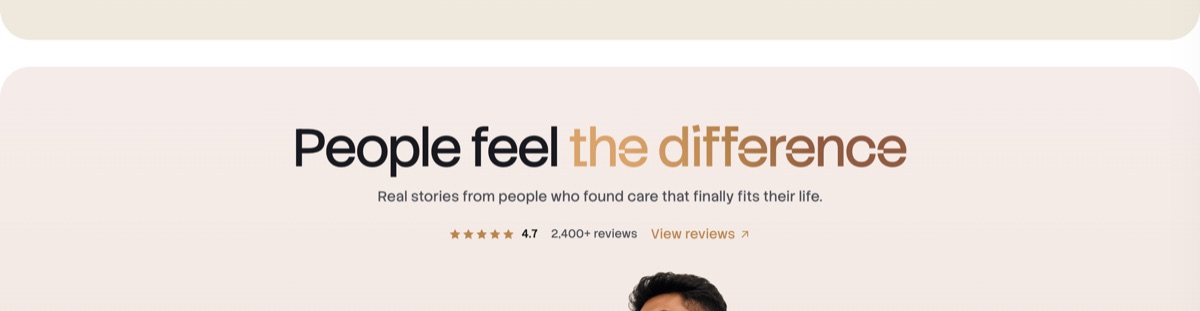
Home. Invented rating and review count with placeholder quotes.
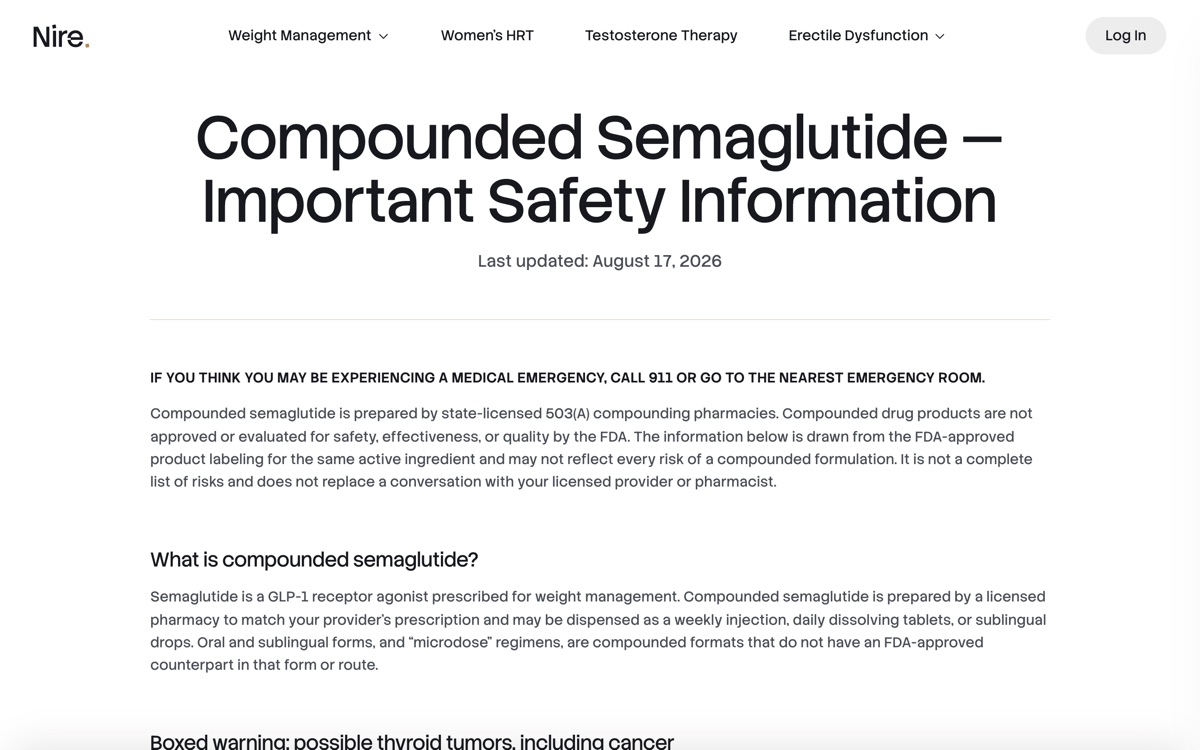
Safety pages. What the medication is, who should not take it, side effects, and when to seek care.
The product
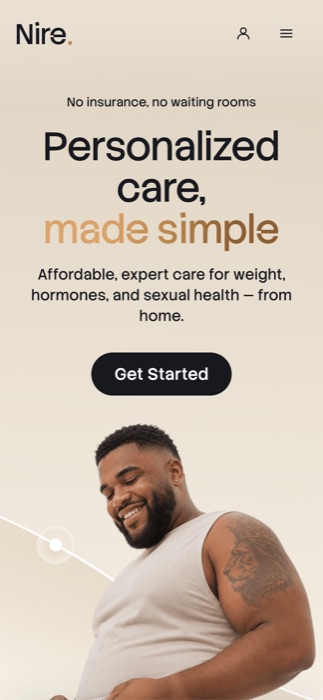
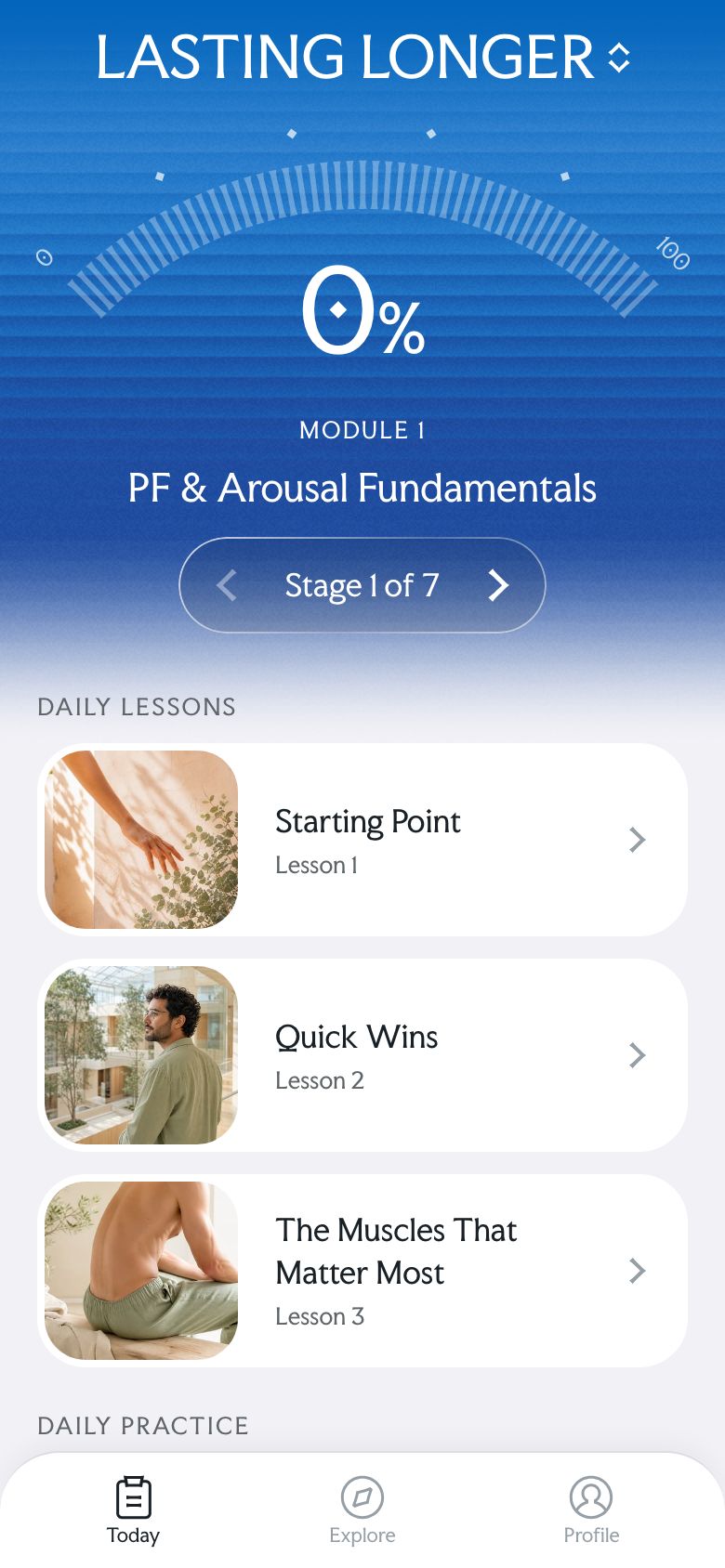
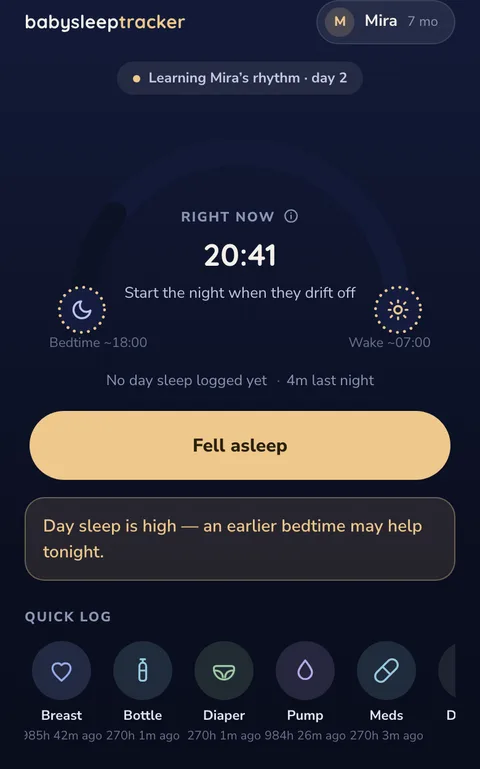
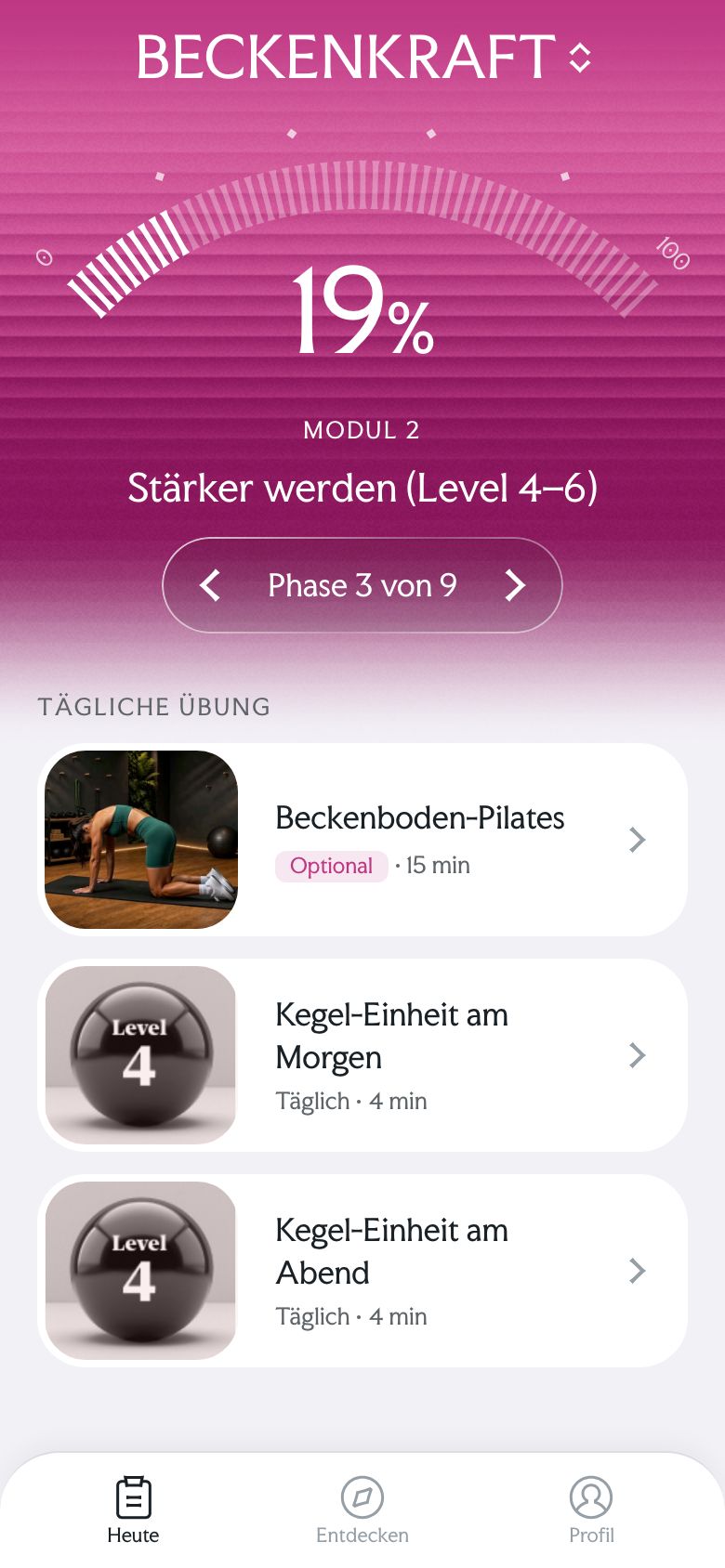
What the customer sees
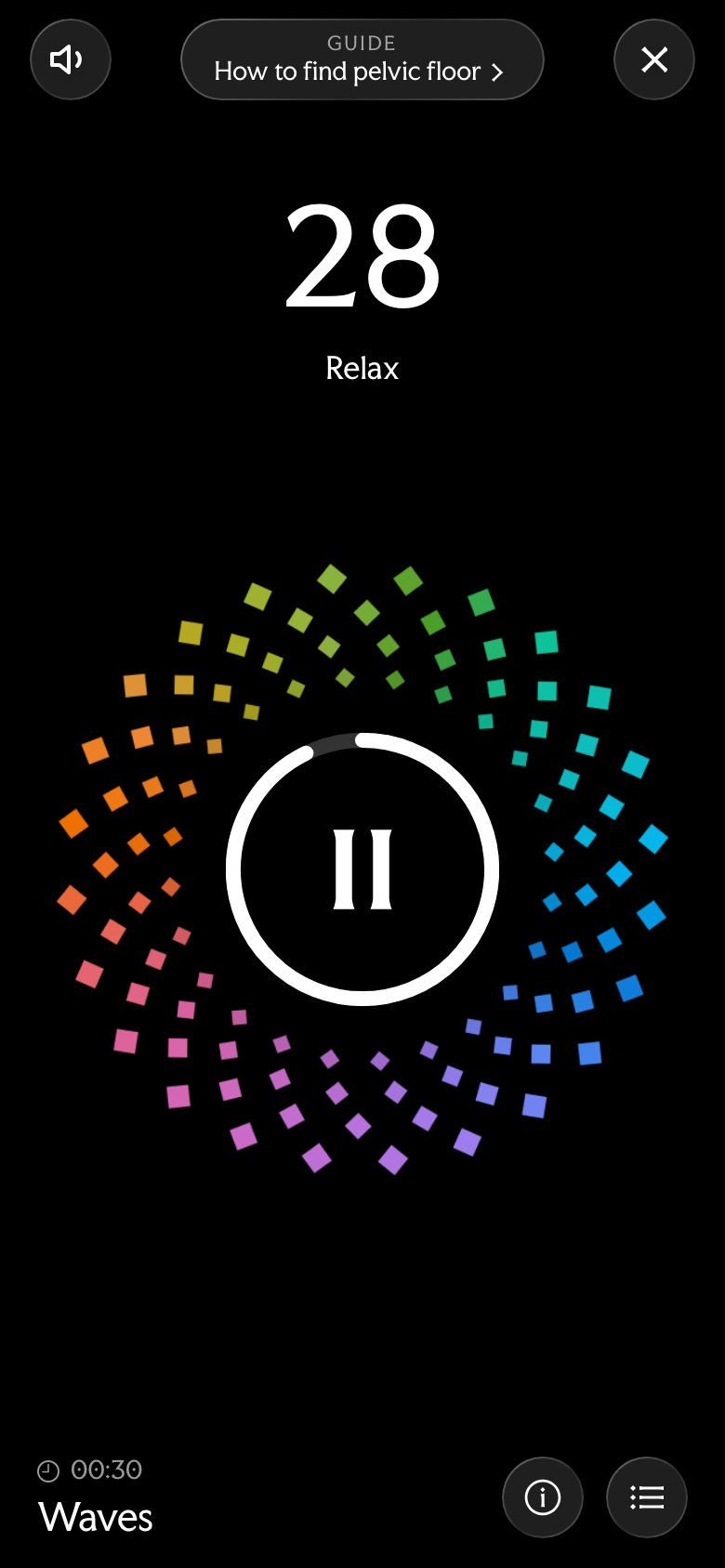
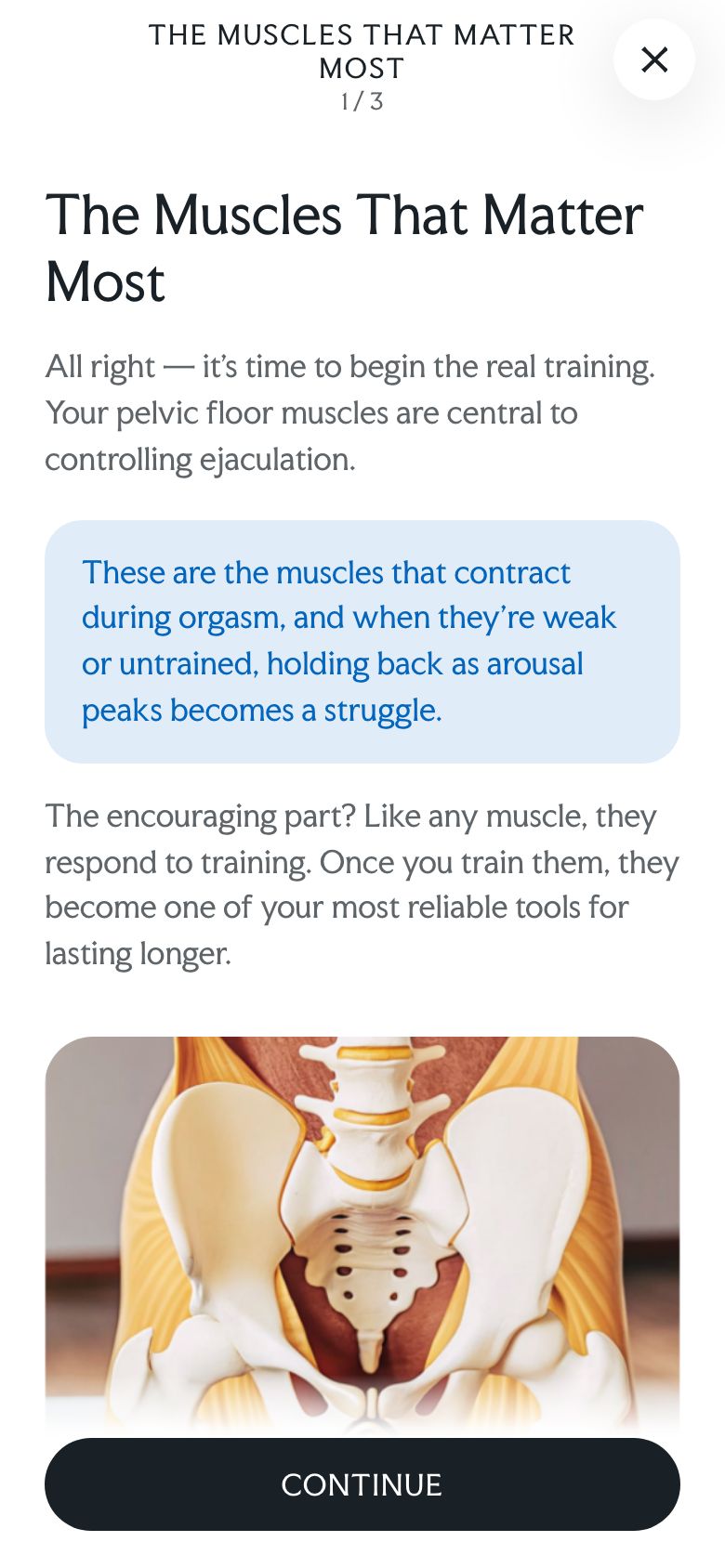
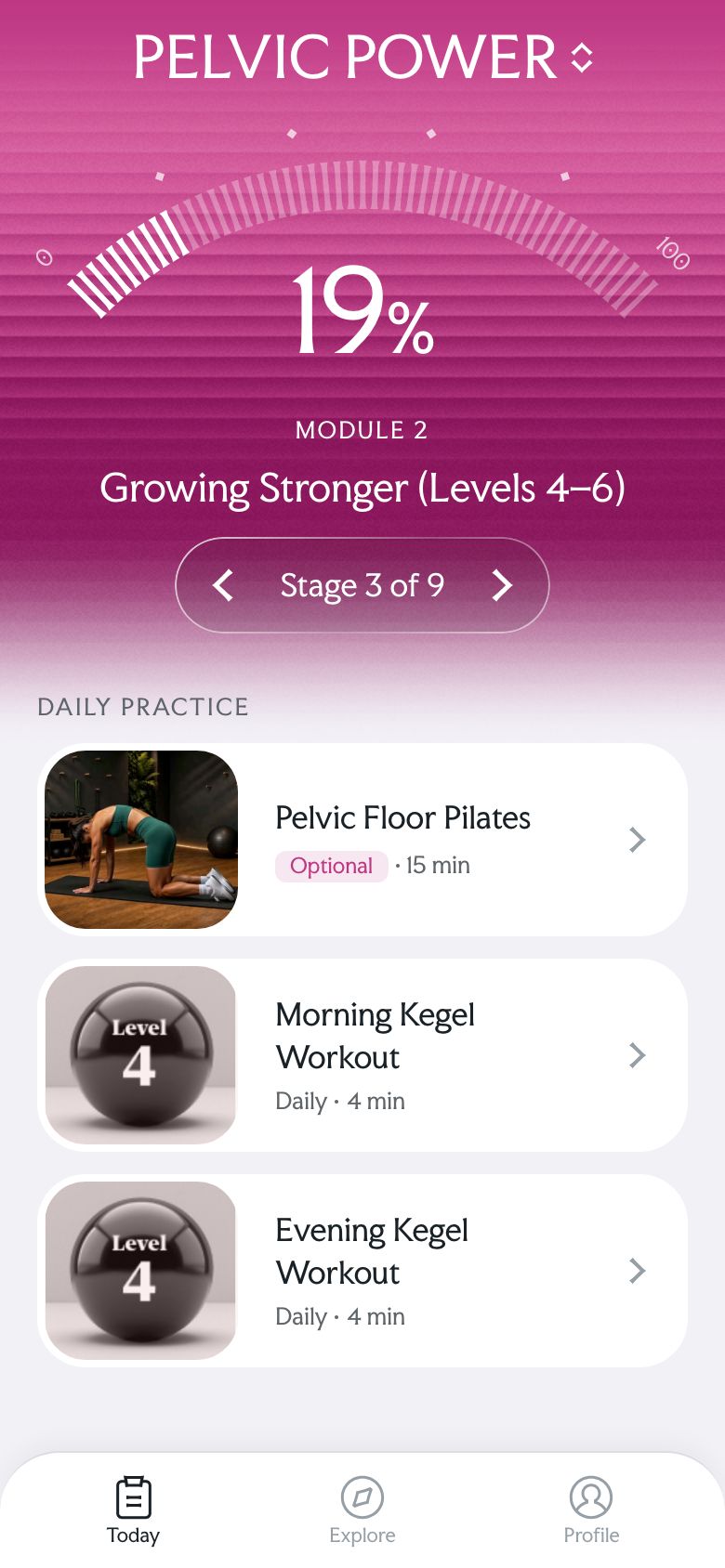
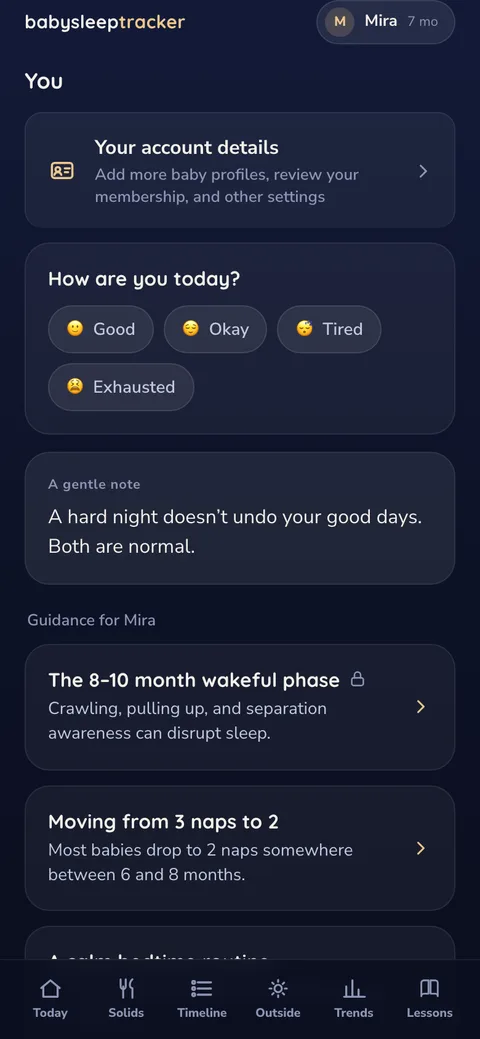
Captured from the running application at phone size.
E. Go-to-market and launch
From a symptom to the right programme, and to the offer
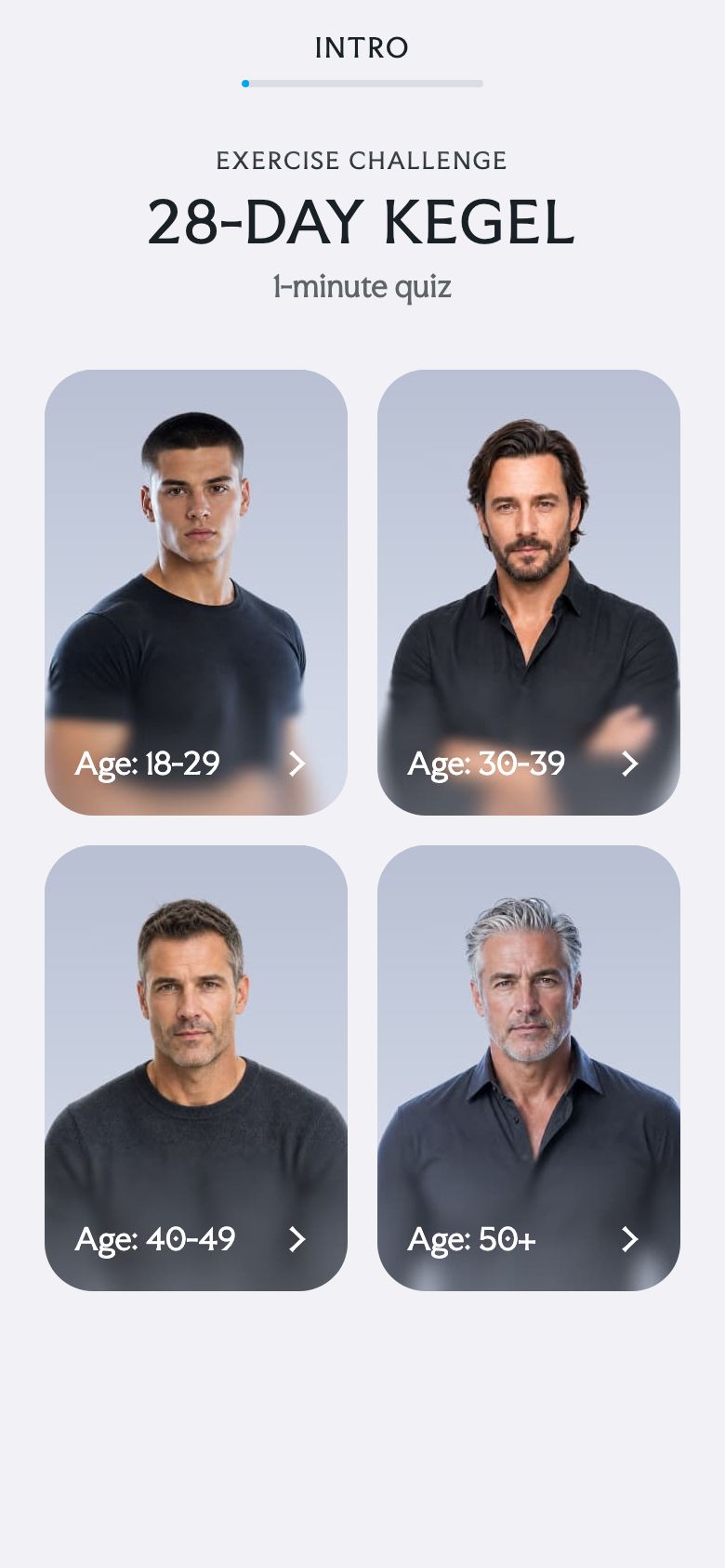
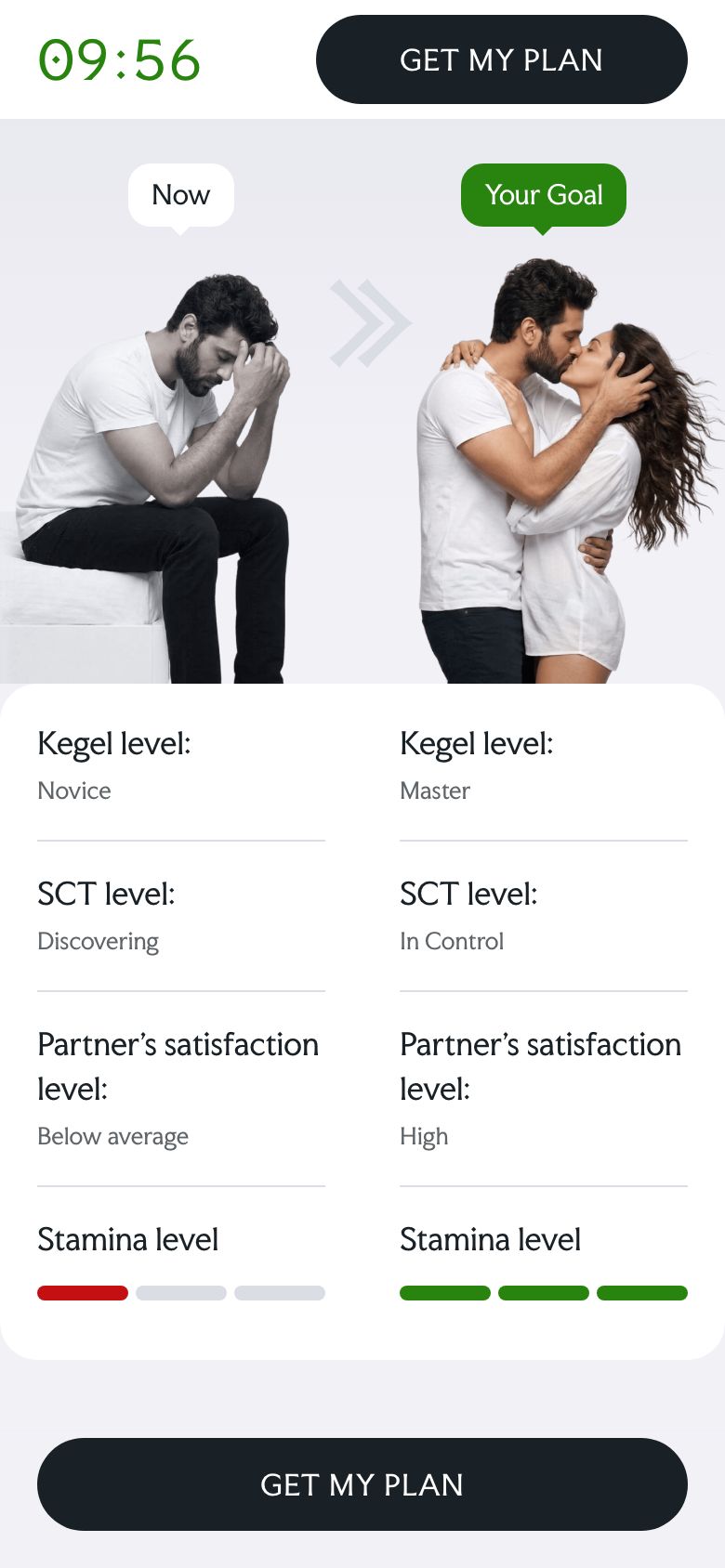
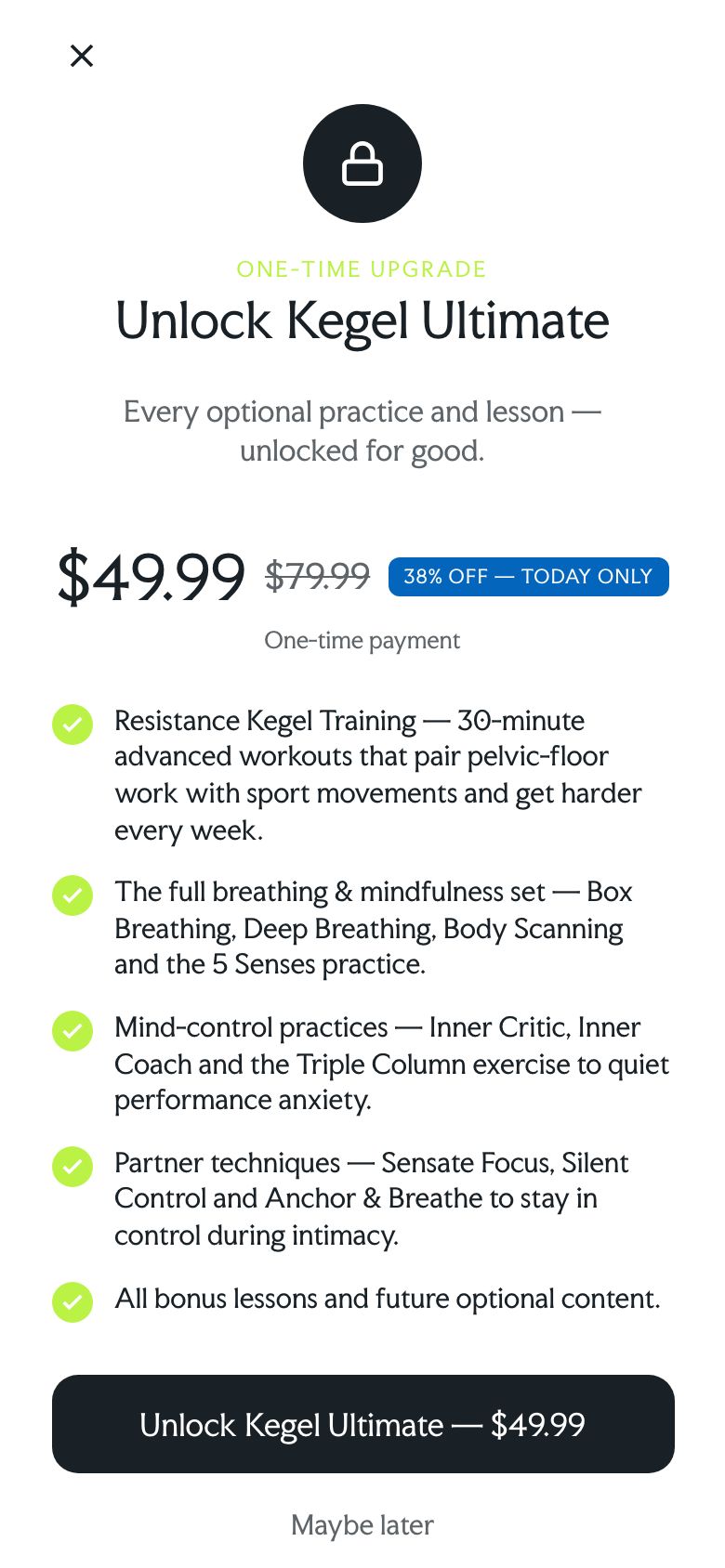
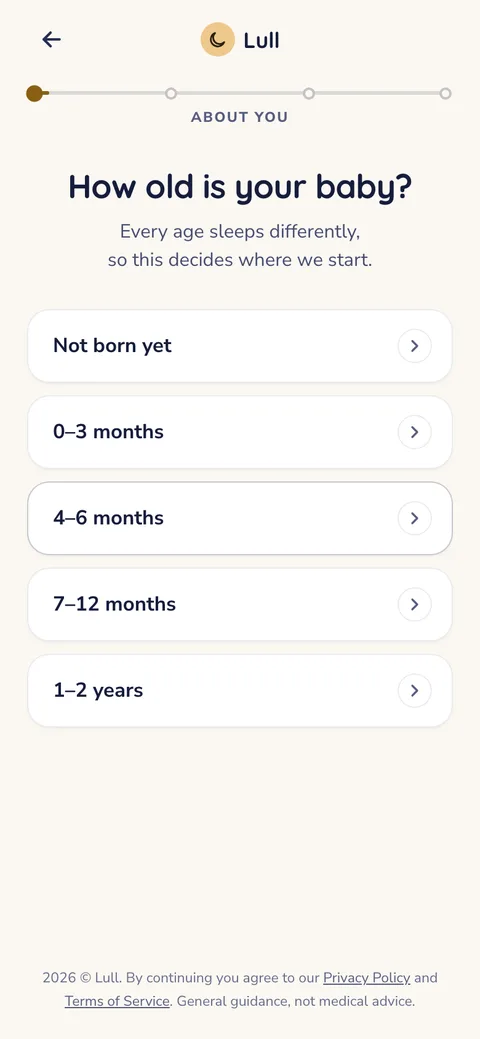
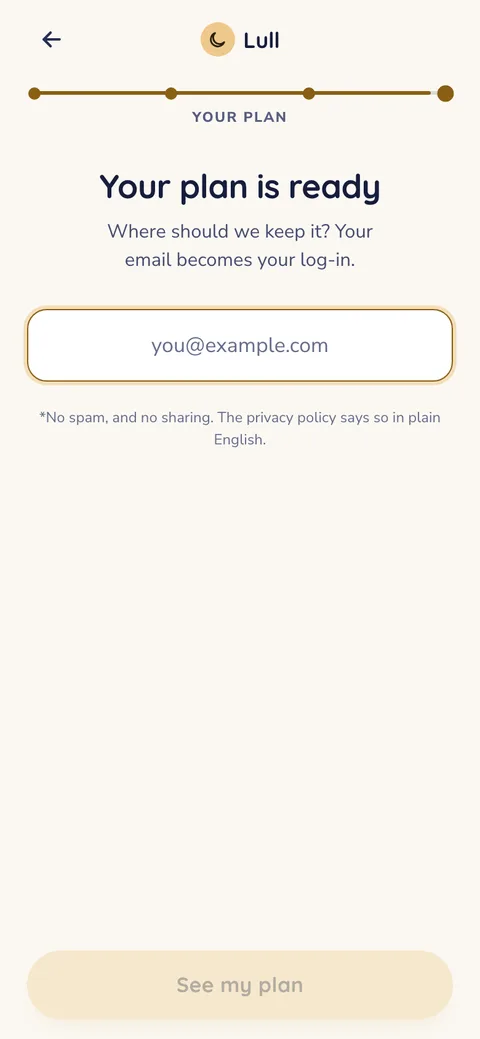
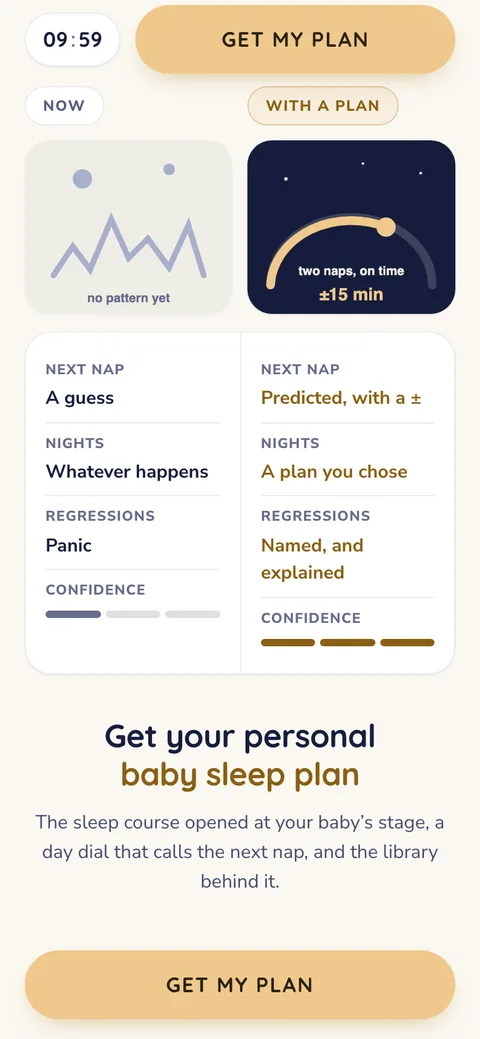
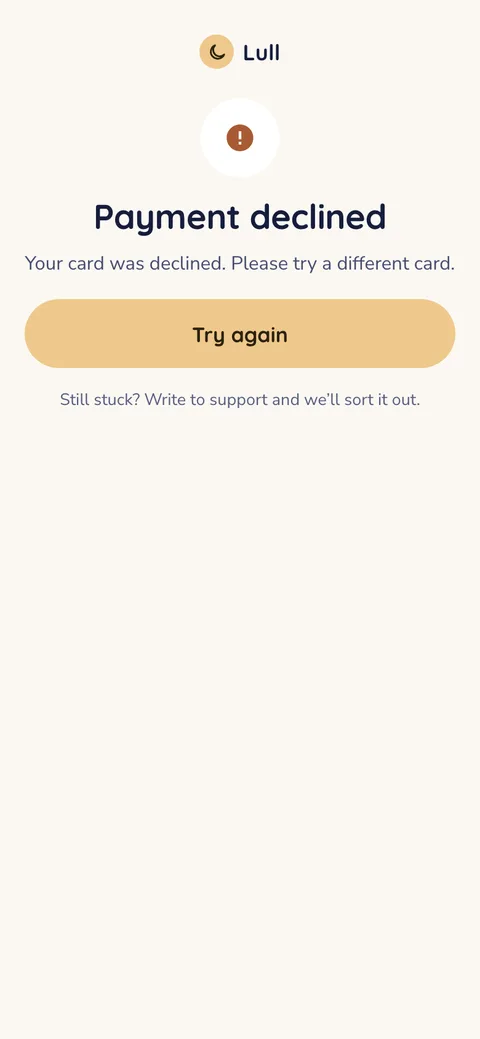
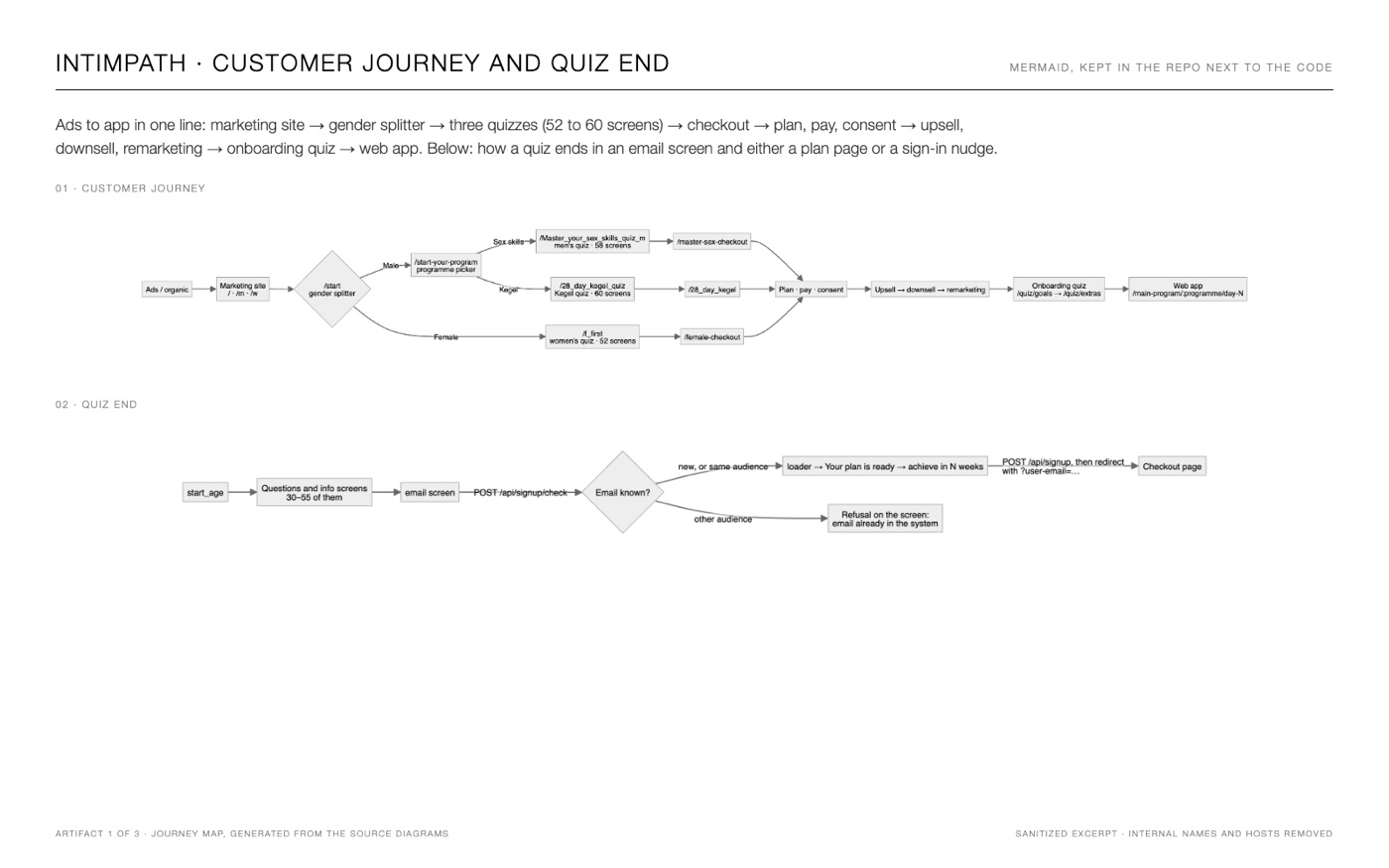
Acquisition is the quiz. Three funnels of 52 to 60 screens turn a symptom into a programme and an email into an account with no password; a parent of two or a man at 1 a.m. does not create passwords. Then checkout, consent, and a fixed ladder of offers with a decline path that never loses the first purchase.
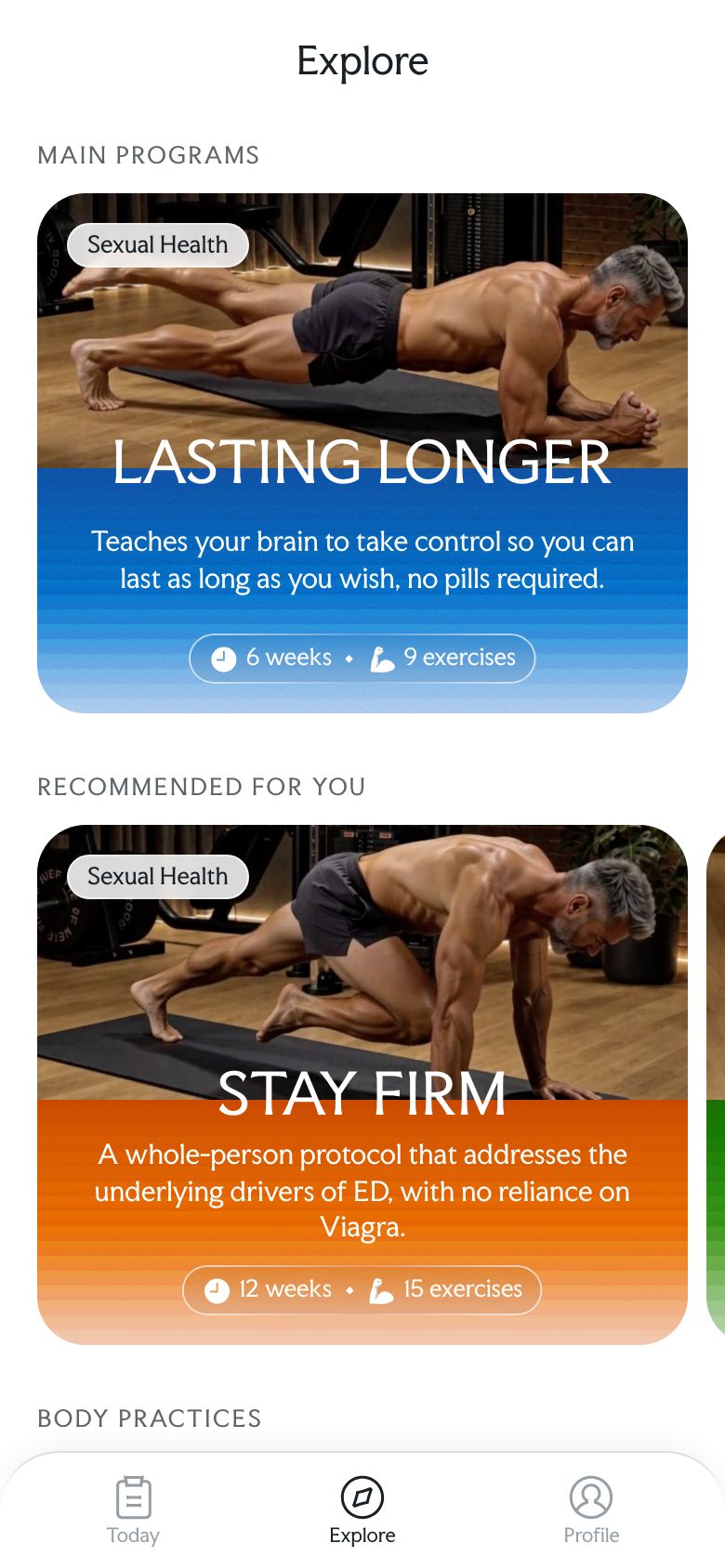
From why to what
A window, not a time. An engine built to be honest about it.
- Start from published norms.Age minus weeks premature picks one of 28 monthly bands; day one gets the population's answer, labelled as such. No empty state.
- Learn this baby, slot by slot.Each wake window is learned separately; the first window and the run-in to bedtime behave differently.
- Never let one bad day move the estimate.Outliers dropped, recent days weigh more, the norm keeps a hand on the result.
- Change regime as the baby changes.Under six months wake windows drive, from nine months the clock; a nap drop needs seven consecutive days of evidence.
- One table of truth.Engine, public age guides and course text read the same per-month table.
The product
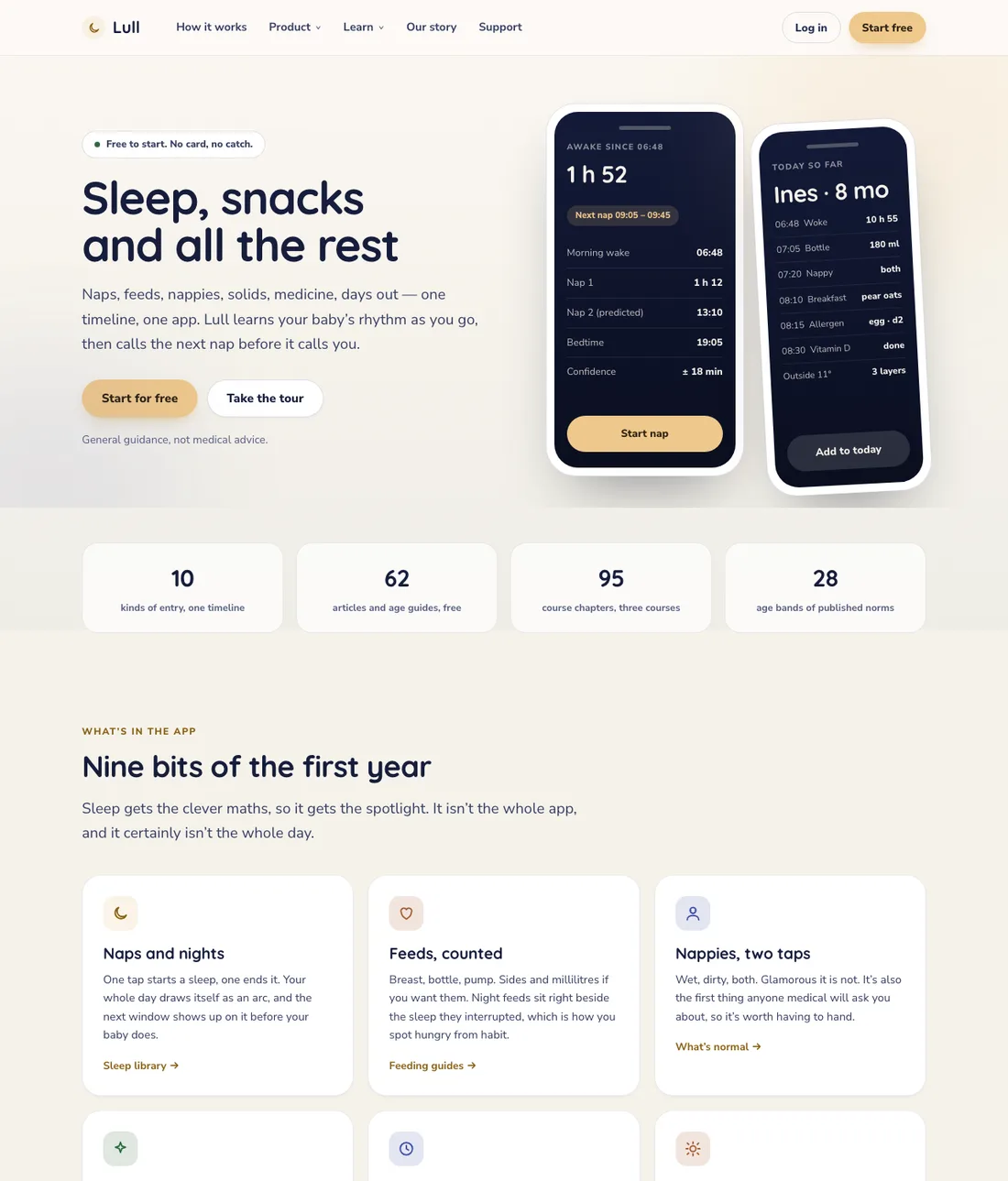
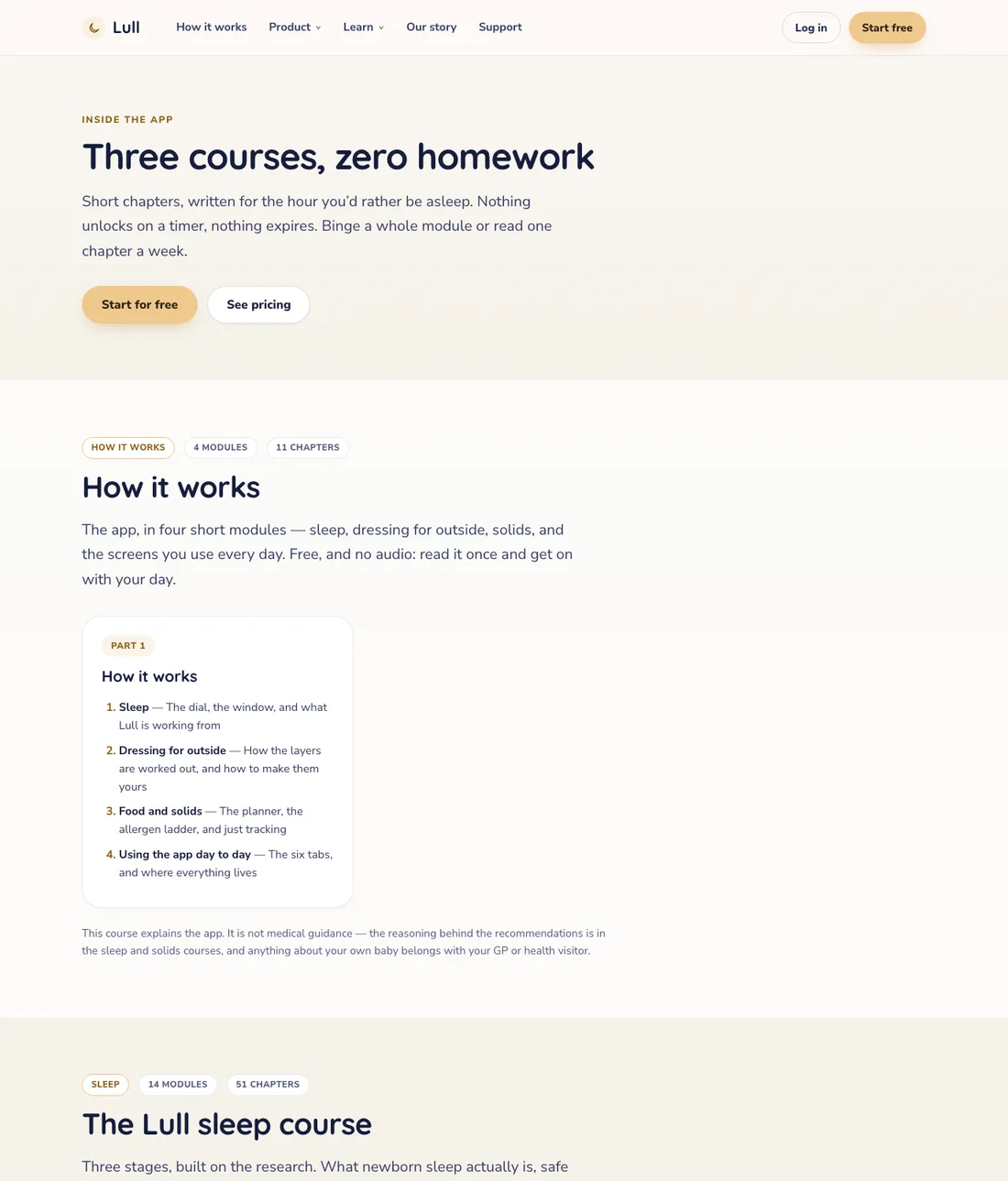
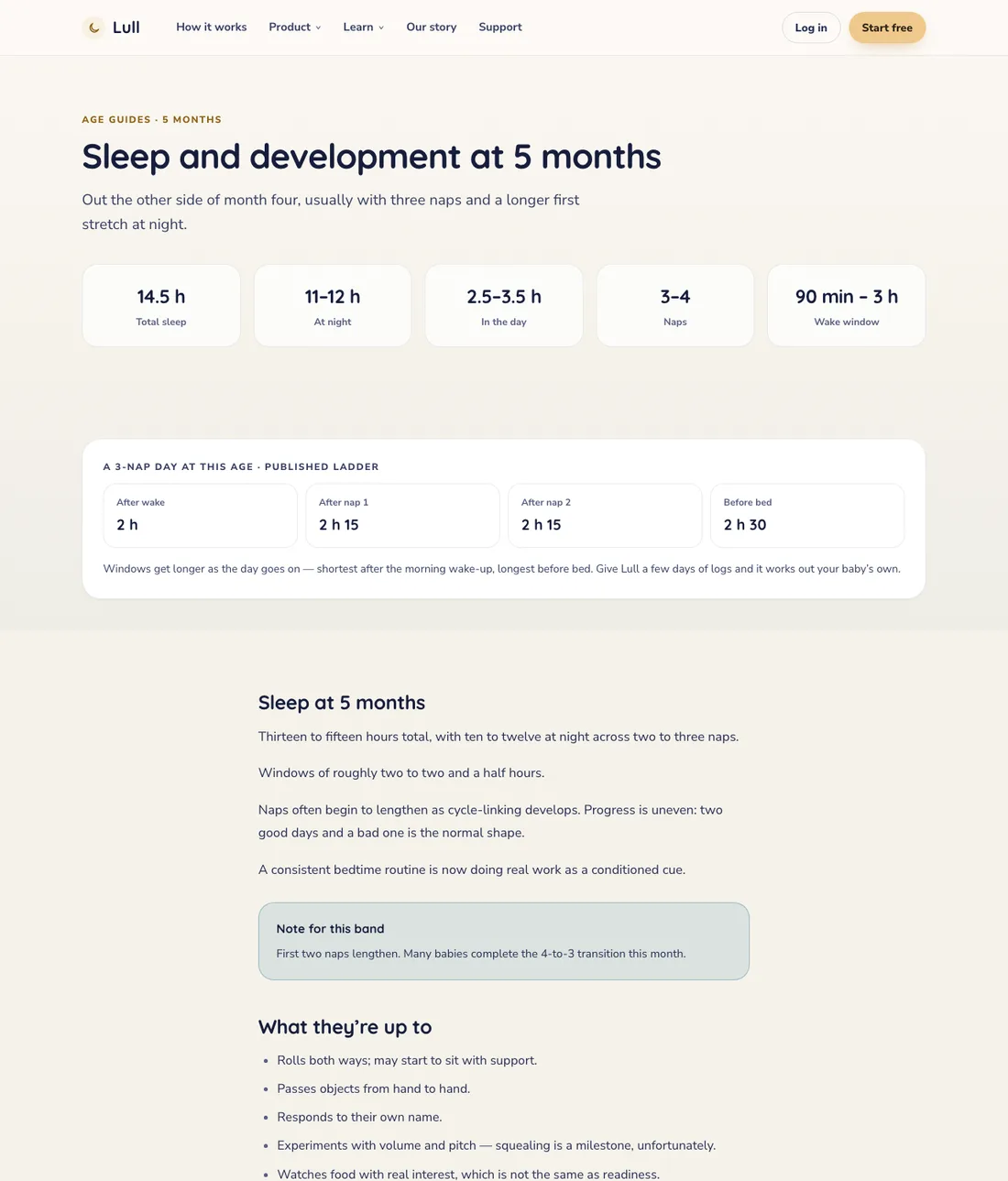
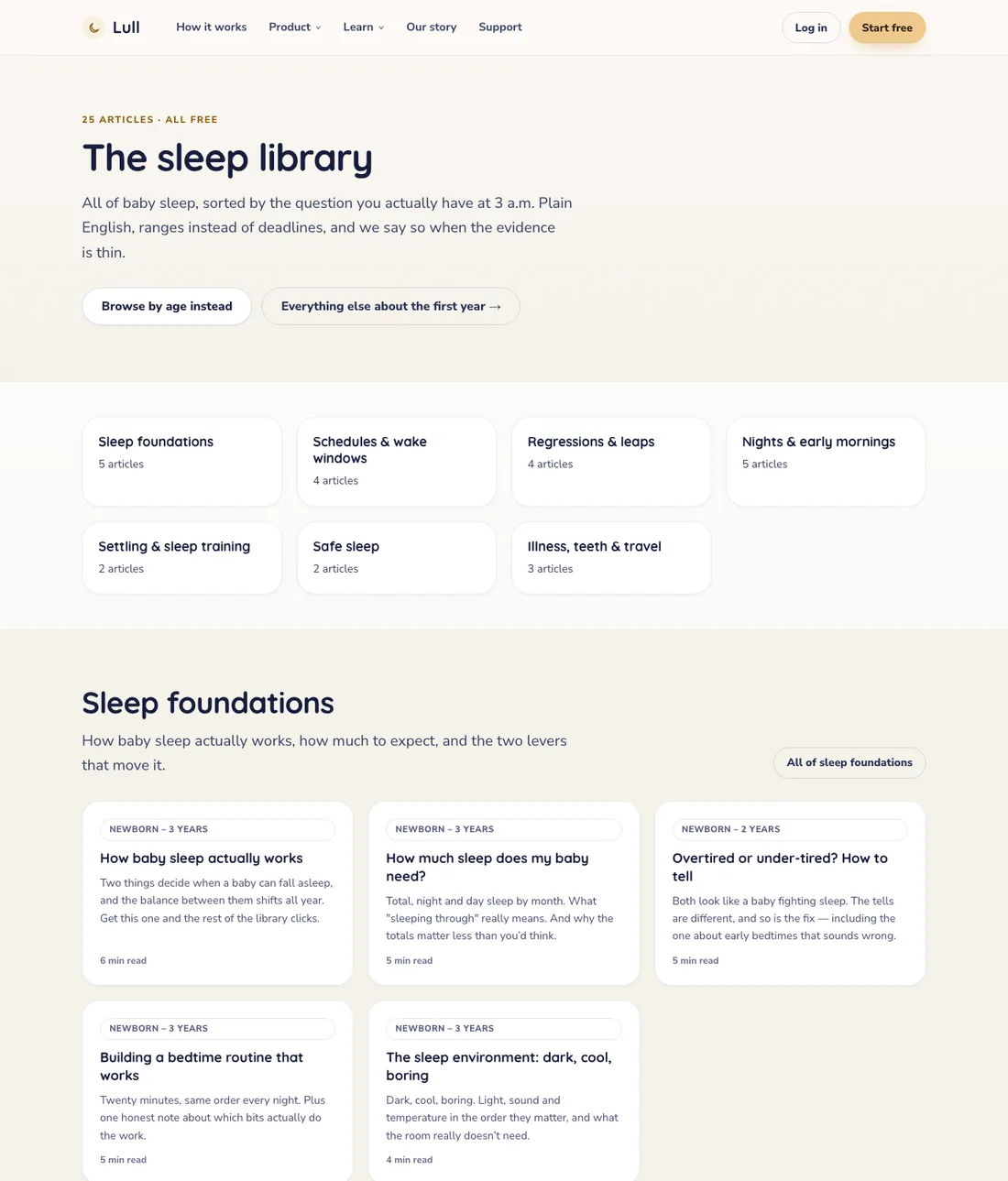
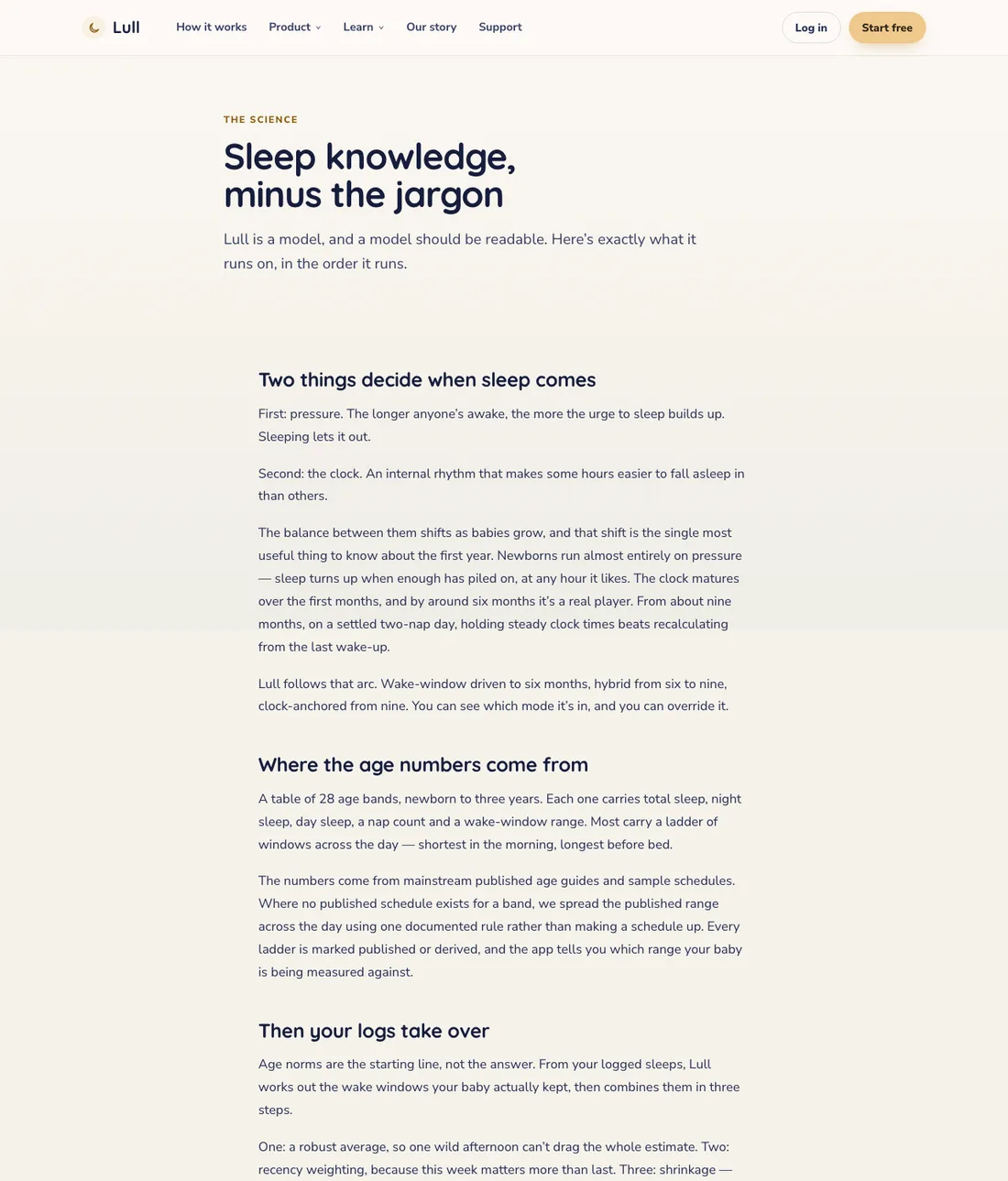
The public site, reading from the same table as the app
Courses, age guides and library pages quote the same per-month norms the engine uses. A page cannot disagree with the app.
The product
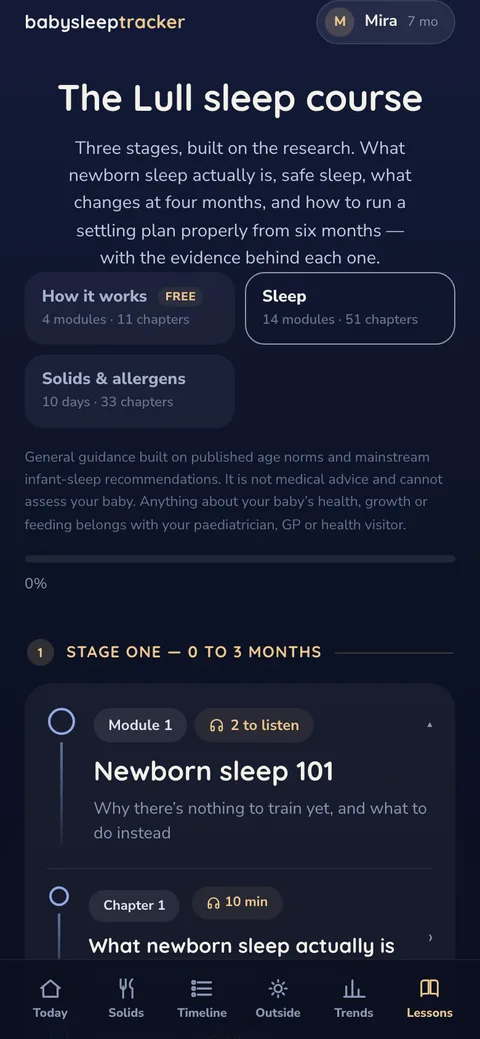
Inside the app
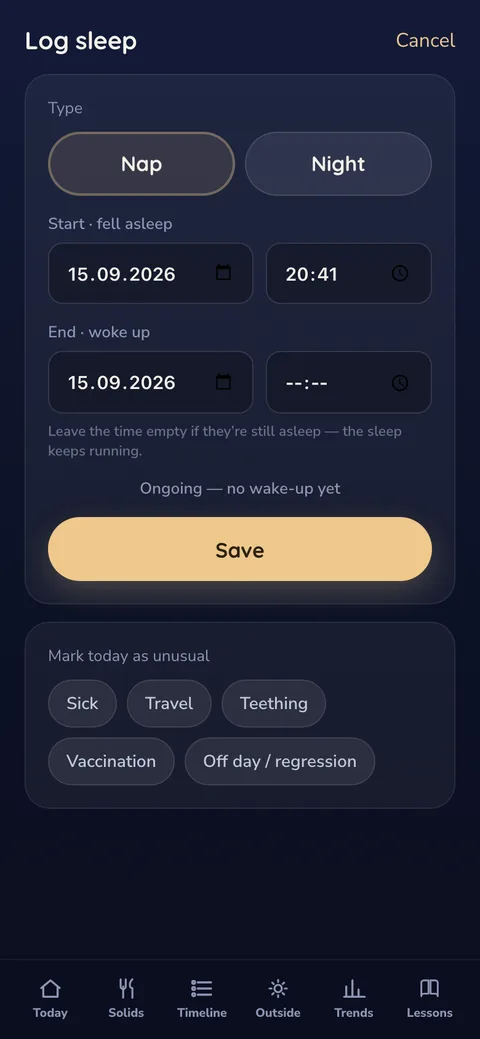
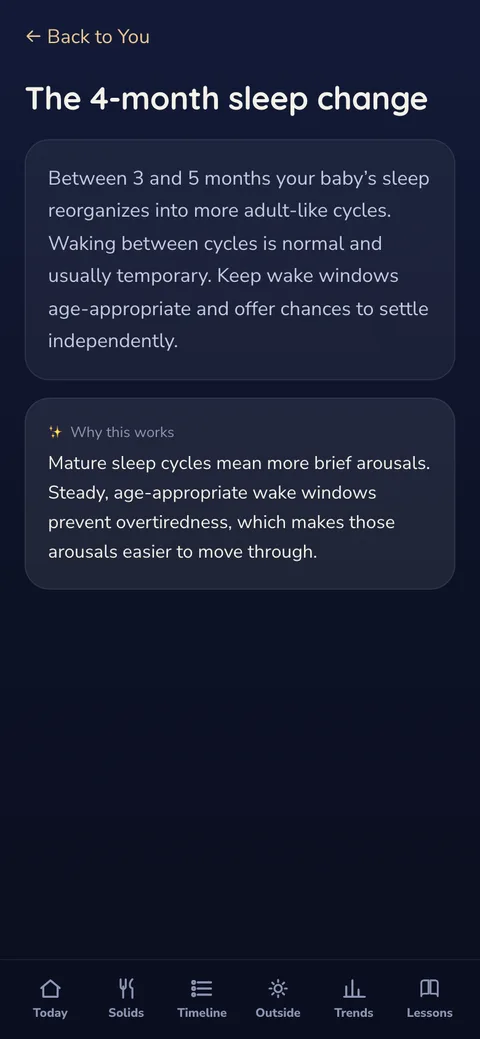
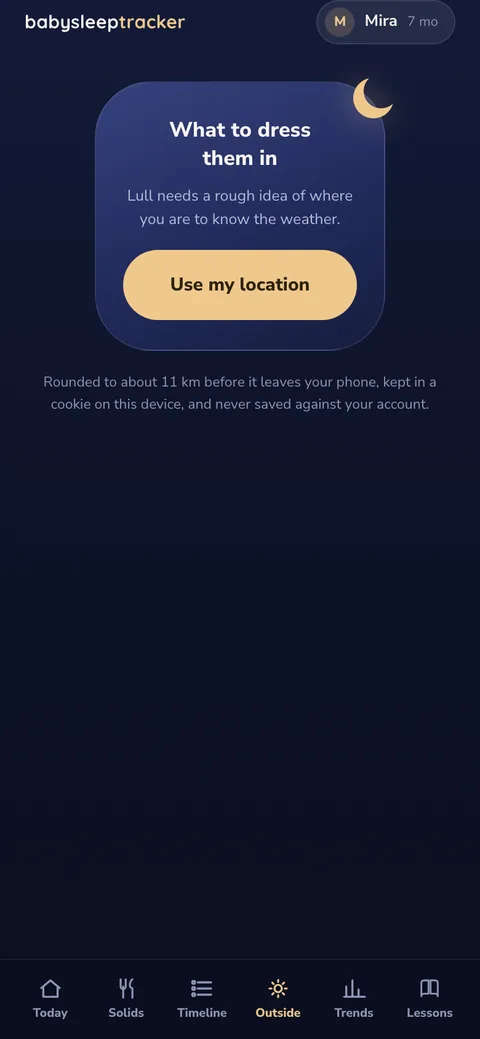
The course a tired parent can listen to, the log that takes ten seconds, the guide that says what is normal, and the one screen that reads the weather for you.
E. Go-to-market and launch
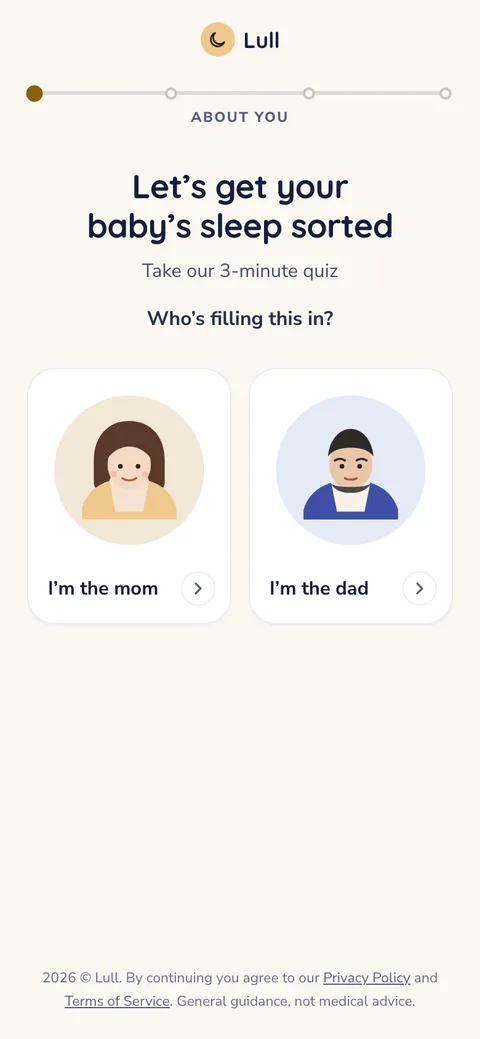
How a parent arrives, and why the first screen is a question
A three-minute quiz is onboarding and acquisition at once: it opens with the parent, branches on the baby's age, and feeds the answers into setup. The email is the account; sign back in by link. Three plan lengths, a fixed ladder of offers, and a decline path that returns to the exact step.
Artifacts · Nire
Audit one-pager, change tracker, evidence index
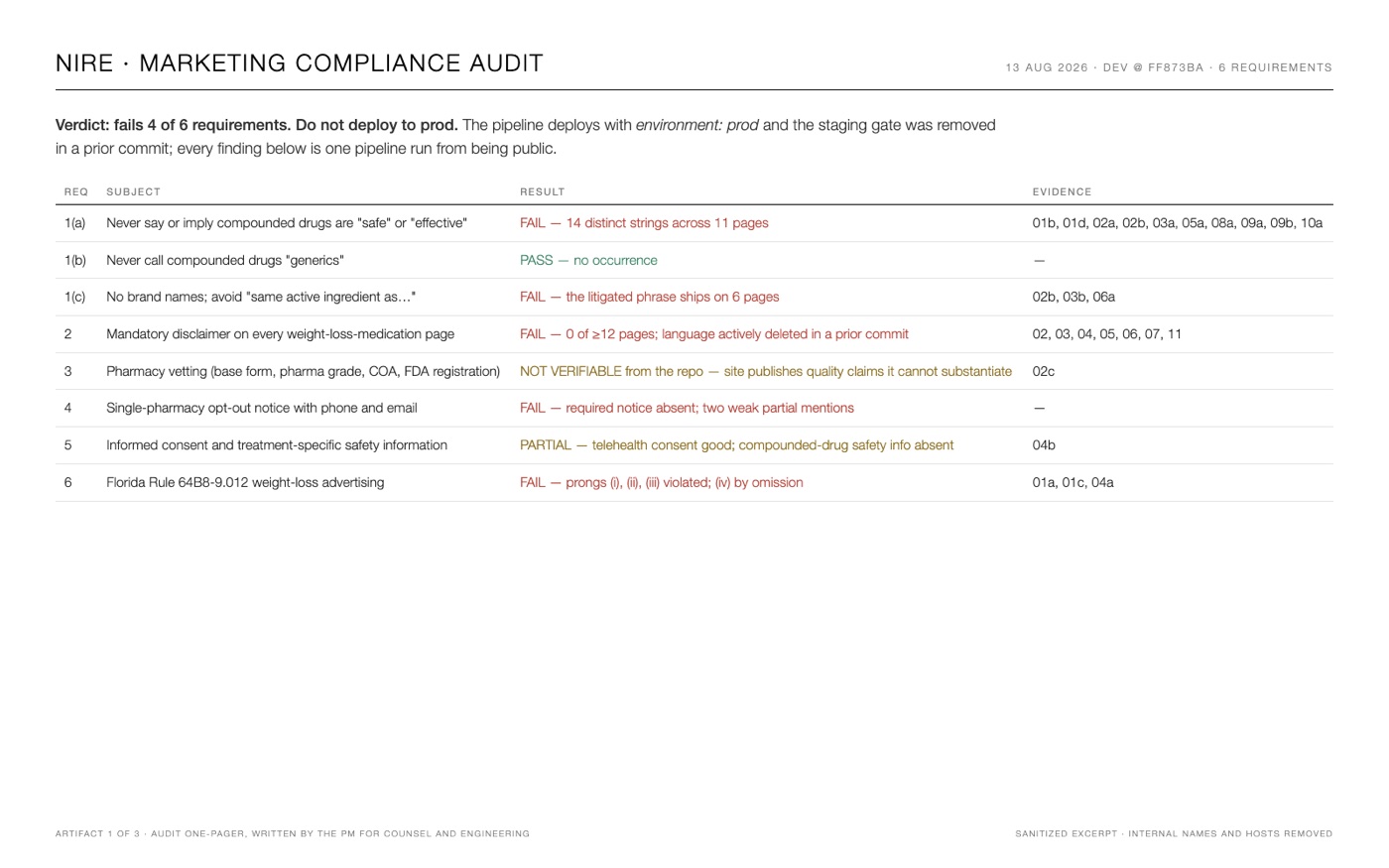
The audit is written for two readers at once, counsel and engineering. The tracker holds the exact replacement copy per item so fixes apply verbatim. The evidence index makes every finding a file.
Artifacts · IntimPath
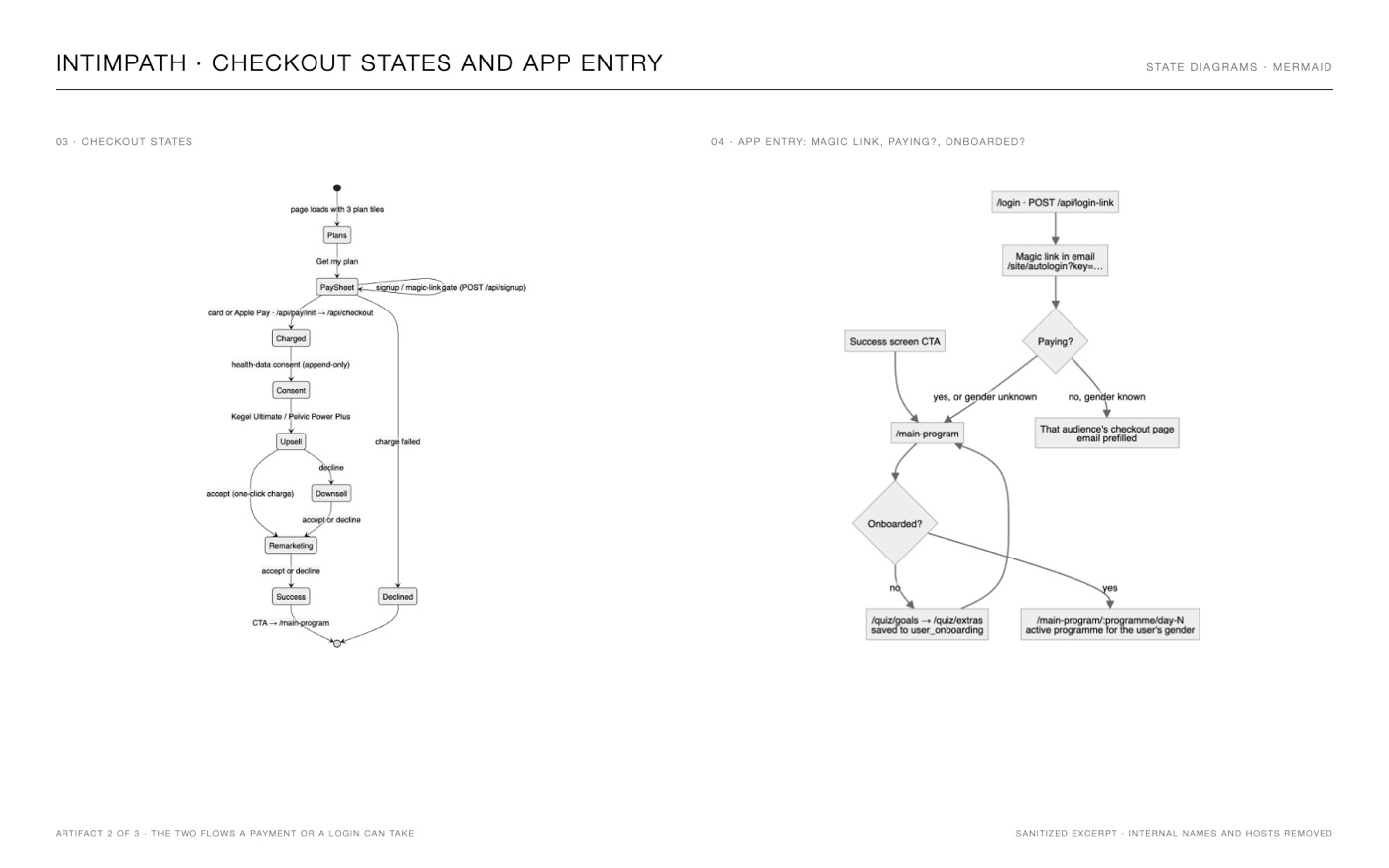
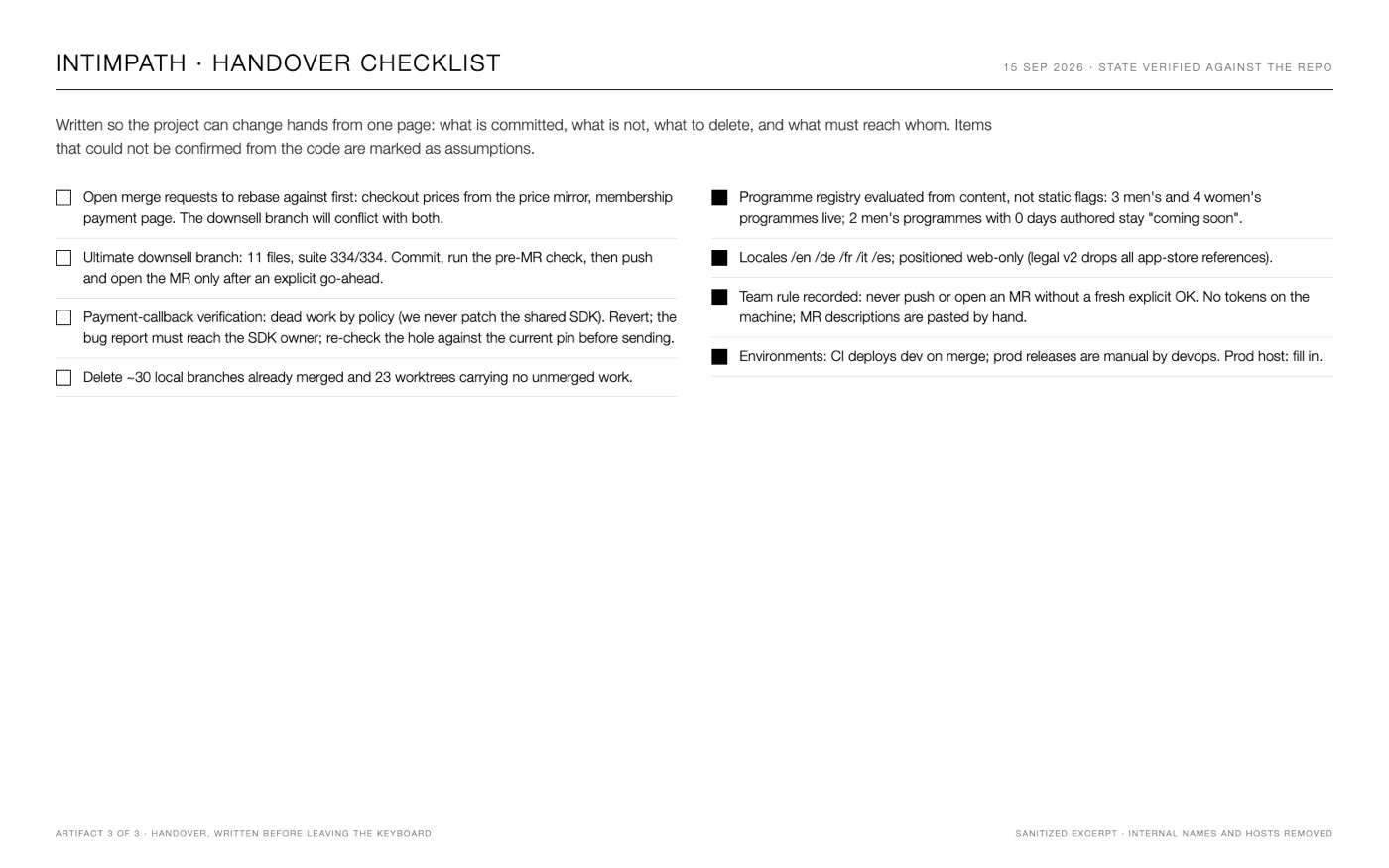
Journey map, state diagrams, handover checklist
Diagrams live in the repository next to the code and render in the team wiki. The handover checklist was written so the project could change hands from one page, with assumptions marked as assumptions.
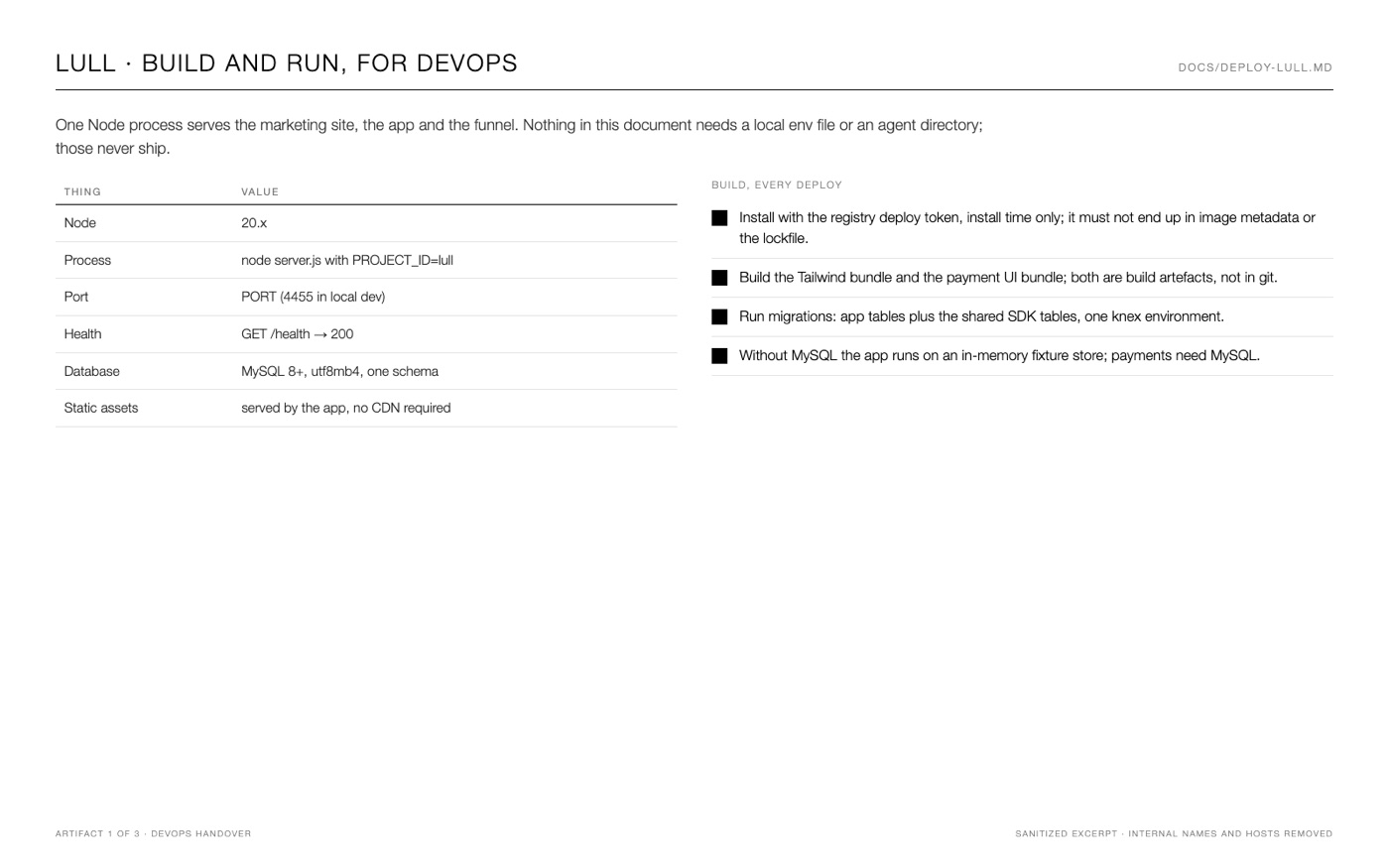
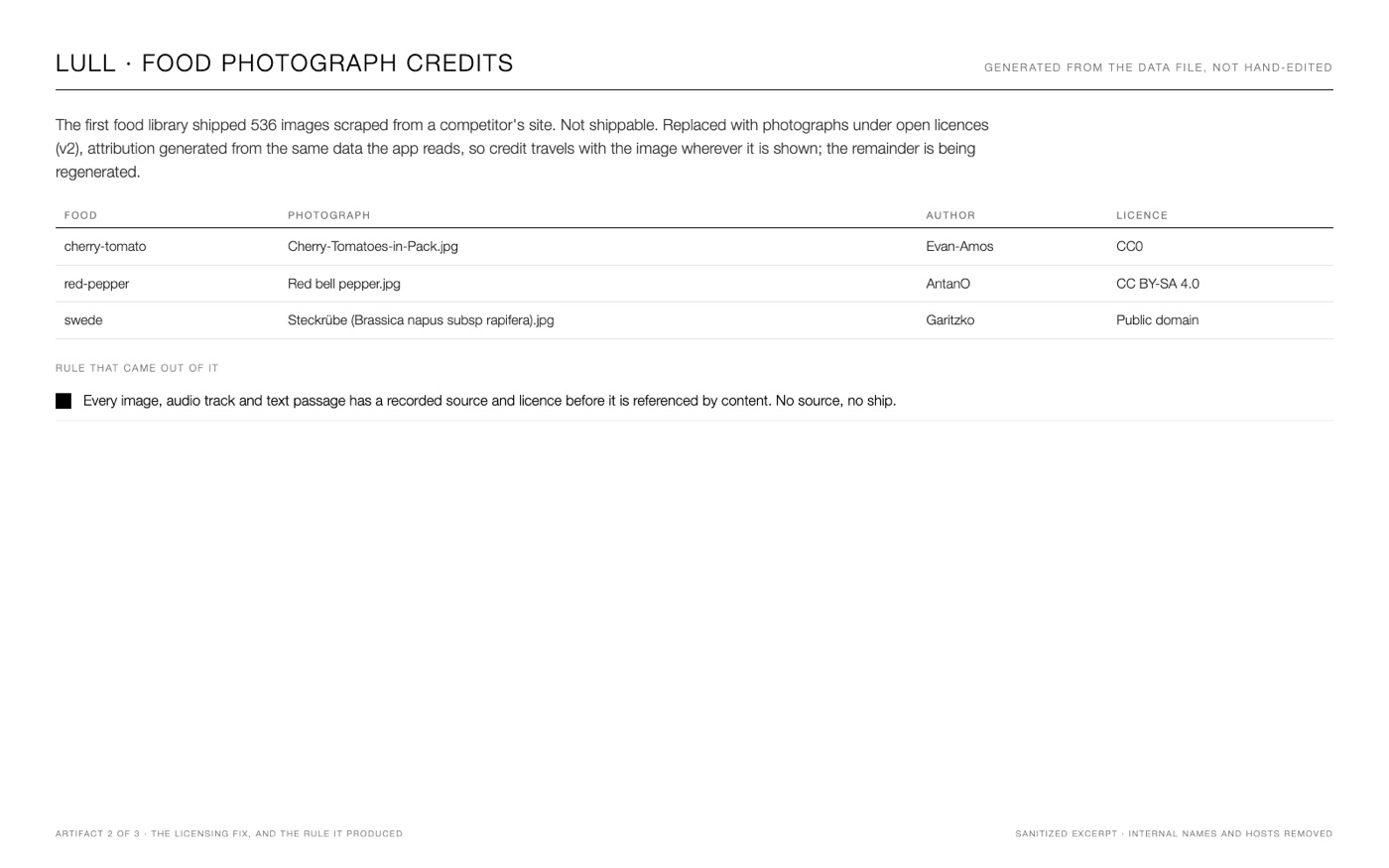
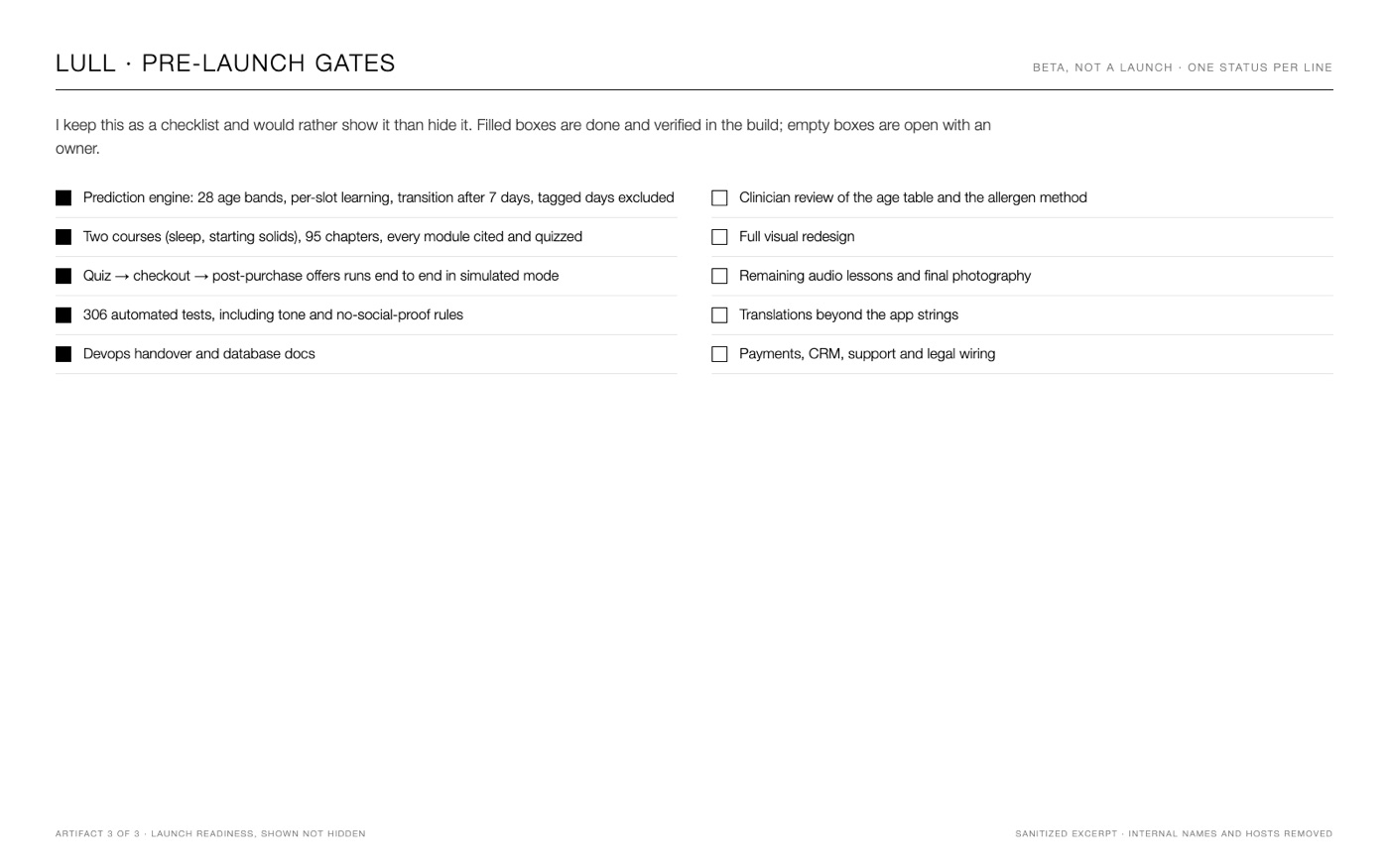
Artifacts · Lull
Devops handover, the licensing fix, launch gates
The build document lets devops run the product without me. The credits file is generated from data, so attribution cannot drift from the images. The gates list is the launch conversation, in writing.